FROM ARIZONA TO LATVIA AND BACK
by Rose Paulson
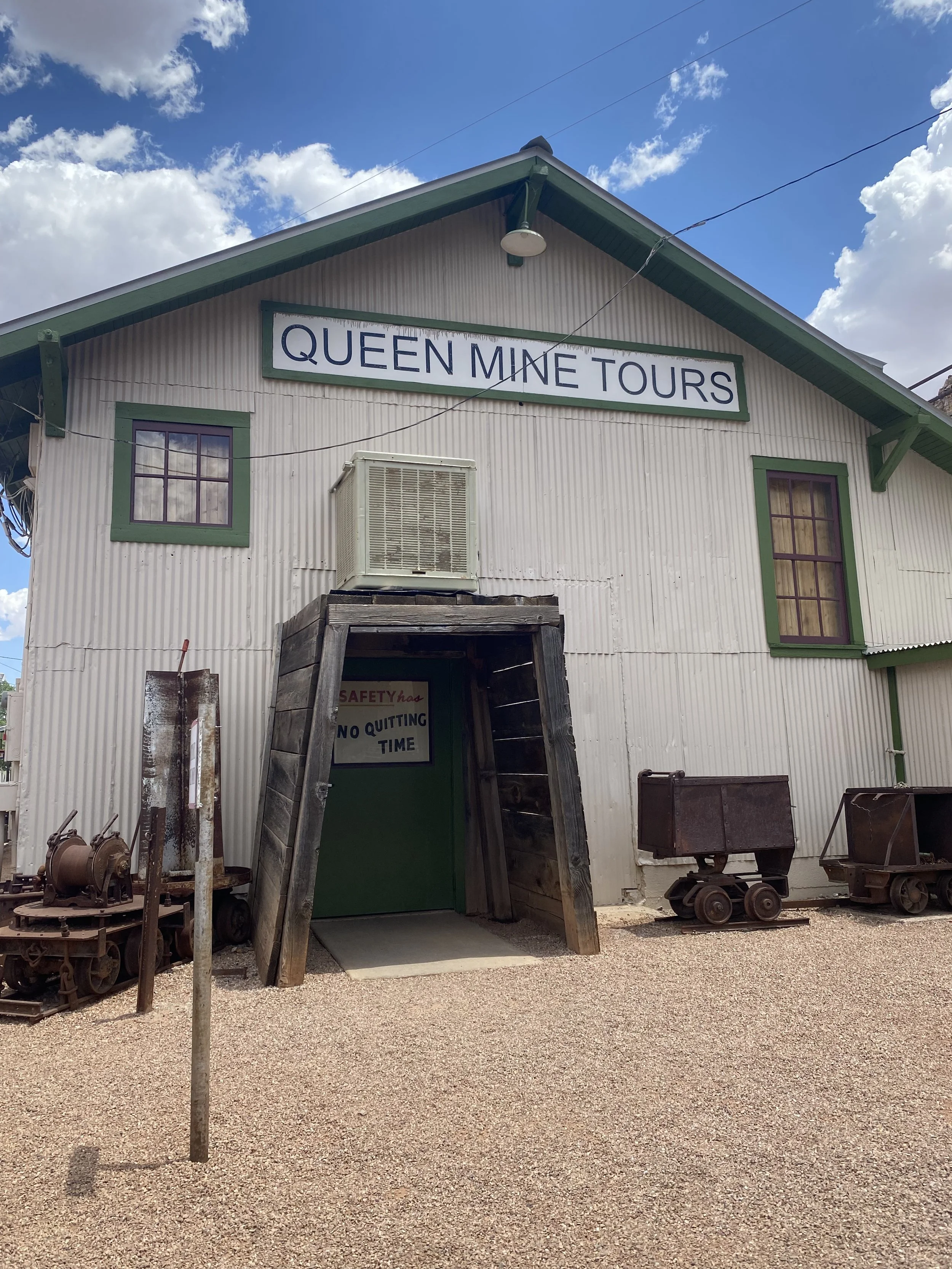
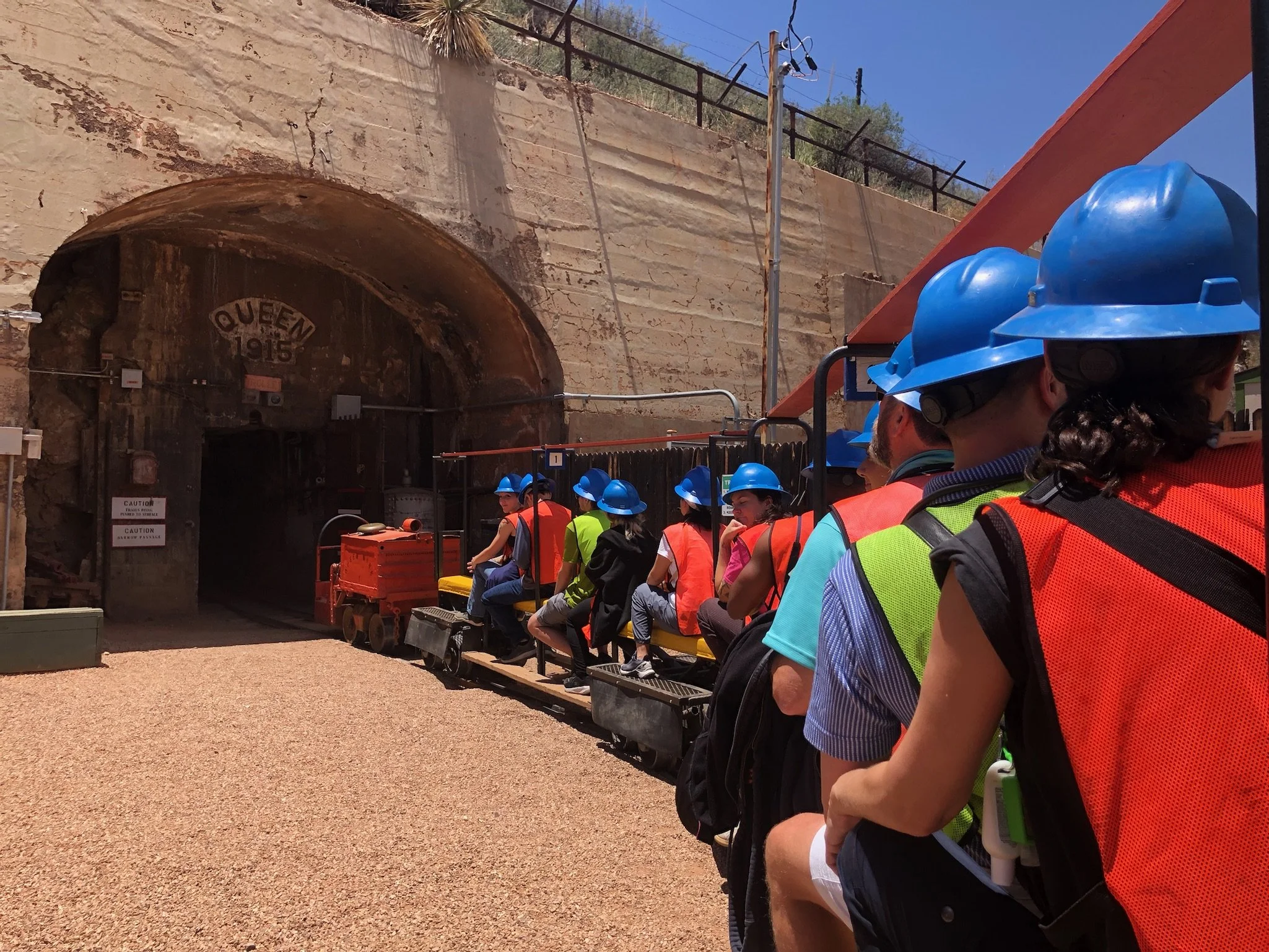
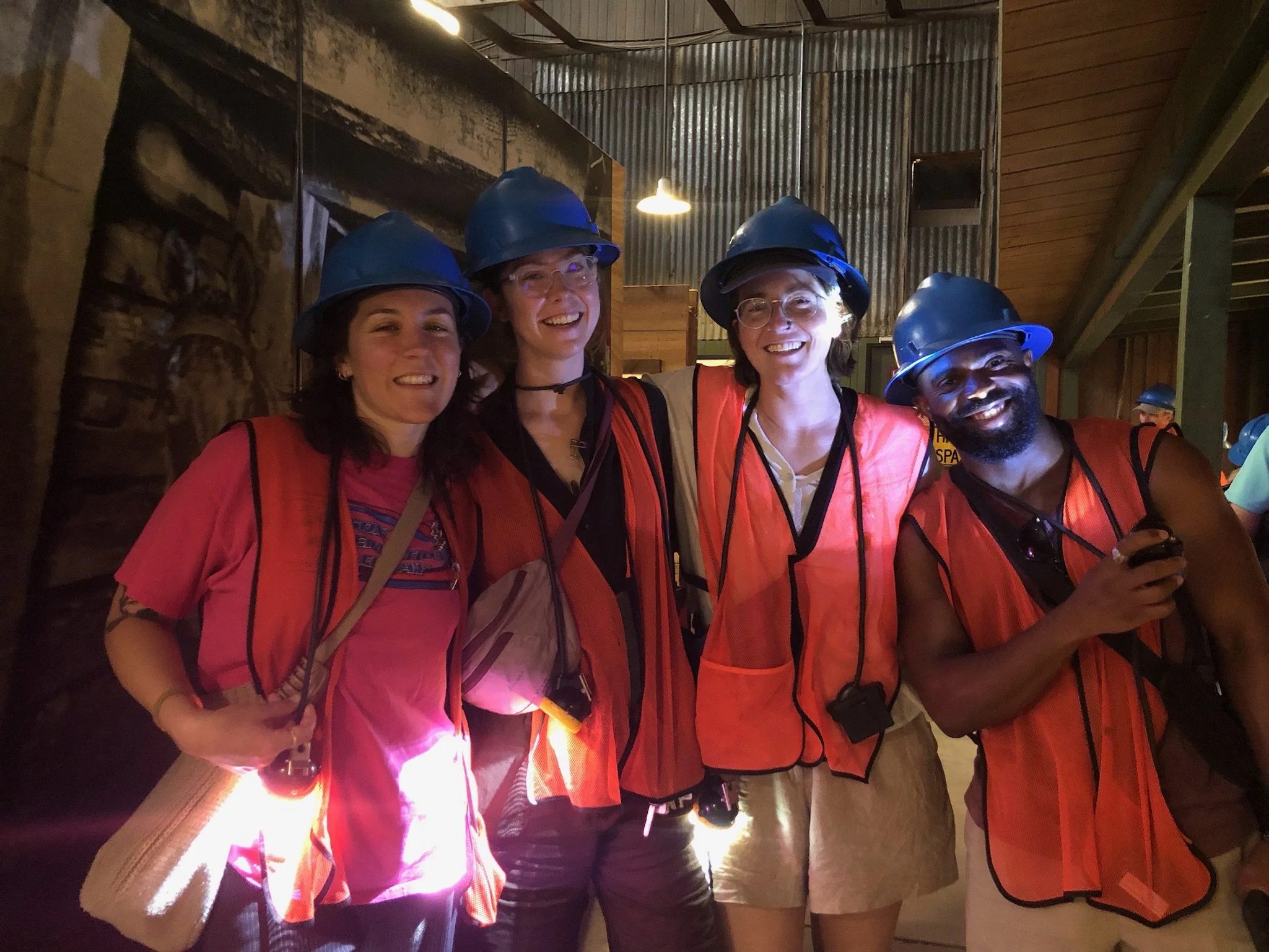
When my classmates and I toured the Copper Queen Mine, I think we were all looking forward to enjoying a hokey tourist attraction. The Southwest Field Studies grant has asked us to engage with the fraught history of southern Arizona, of the violence of a border drawn and redrawn, of extreme heat and treacherous landscapes. Though I knew the mine had its own history of exploitation and pain, at least this time we would get to learn about it while wearing funny blue hard hats and riding a very slow train. It was also our final morning in Bisbee, a small town originally founded for copper, silver, and gold mining in the 1880s, and it felt important to learn about this part of its history.
The tour had two stops—one at a cavernous hollowed-out cave, the other at a tunnel that led to the mine’s elevator. The rock walls of the mine were a light brown-gray. Our tour guide demonstrated how miners would hammer a metal rod to make a narrow hole in the rock and fill it with dynamite, and then he produced a hammer and swung it himself. He showed us small train cars that used to carry the rock from the mine, and a bicycle that supervisors used to ride between pairs of workmen. He used his flashlight to point out veins of copper, silver, and other minerals snaking across the rock walls. “Any mineral nerds out there?” he asked before pointing out some malachite.
The guide seemed young, possibly young enough to be one of the undergraduate students I teach, and he had a gentle voice, almost a slight Southern drawl. His enthusiasm for the mine and its history was refreshing. He cracked jokes in a dry tone, waiting several seconds before a sly smile appeared on his lips.
But as time passed, I thought it was strange to hear the working conditions continue to go unmentioned. Before the tour, all I knew was that there had been a major miners’ strike and that the mine had retaliated harshly. I learned what really happened after we left the mine and left Bisbee altogether: in May 1917, union members presented Phelps Dodge, the company that owned the mine, with a list of demands that included increased safety precautions, protections around dynamite usage, an end to strip searches after shifts, and an end to discrimination against union members over non-union members. In July the demands still hadn’t been met, and the workers went on strike. Our tour guide also failed to mention that in response, Phelps Dodge executives and their collaborators rounded up over 2,000 men from Bisbee and nearby Douglas and packed them onto cattle cars going to New Mexico with no food or water. Company officials told them they would face physical violence if they ever returned, and most never did. This event came to be known as the Bisbee Deportations.
At one point during the tour, one visitor asked our guide if the miners were “happy.” It seemed like a loaded question, as if planted as a test by Phelps Dodge executives. The guide’s answer was yes, of course, the miners were happy—they were paid well, he said.
Our tour did, however, expand upon the living and working conditions of the mules that dragged train cars full of rock within the mine. The guide said the mules had been trained to pull exactly four cars, and if they heard the chain of a fifth car added behind them, they would refuse to pull. Phelps Dodge kept the mules underground for a full four years, but not to worry, our guide explained—they were blindfolded with progressively fewer layers of cloth once they were above ground so that the sunlight wouldn’t hurt their eyes, and they enjoyed a long and happy retirement. He even made a joke about them having their own HR department.
The other gags at the mine began to feel less charming and more distracting. The gift shop was mostly basins of gemstones large and small for sale, some of them obviously dyed artificial colors, and I got a splinter while running my fingers through one of the piles. Down in the mine, our guide showed us an old miner’s toilet and made someone sit atop so that we could sing them happy birthday. High up in the ceiling, there was a mannequin in a mining uniform, stooped over and working away. Our guide joked that he was still waiting to collect his last paycheck. He looked more like a ghost still haunting his last place on earth.
After the tour, our tour guide was kind enough to stay back and chat with our Field Studies group a little longer. But even when we asked him directly, he was hesitant to talk about the Bisbee Deportations. He said that what people don’t realize is that this all took place during World War I, and the US government needed copper to keep fighting. None of us said it to him then, but as we later discussed, this reasoning seemed insufficient—surely one person’s rights don’t cancel out another’s. If the mining industry was so vital, the mine executives shouldn’t have treated their workers so poorly. The necessity of one’s labor does not justify abuse.
We walked down the street and stopped in a biker-themed restaurant for lunch. As we kept trying to make sense of the tour I asked the man working behind the bar, who turned out to be the owner, if he had ever been to the mine tour. He said twice, a while back—he and his wife had spent winters in Bisbee for several years before moving down full time about a year ago and opening the restaurant. He also said he didn’t know anything about the deportations, which surprised us. It meant that the tour company’s omissions had real consequences, had influenced and shaped how he understood his new home.
The more I thought about it, the more it made perfect sense that the Queen Mine and all its oversights might continue to thrive in a place like Bisbee. The appeal of Bisbee as a tourist destination is as much about its history as its old-fashioned vibes. In the middle of the desert, tucked between mountains, its squat houses with angled roofs and wide front porches are tucked close together within walking distance of a compact downtown of winding European-style streets. Its center is dotted with old hotels advertising retro decor and haunted rooms and little boutiques selling hand-bound books, imported perfume, dollhouse furniture, and vintage cowboy boots. During our visit, it happened to be Pride weekend, and the streets were filled with partygoers of all ages, with nightlife ranging from a quiet acoustic set to line dancing to burlesque. Maybe Bisbee is a respite for the rest of the region, which votes overwhelmingly red. Maybe Bisbee is the funny blue hard hat of southern Arizona.
***
After returning to Tucson I thought back to the coal mine tour I took once as a child on a family road trip through West Virginia. We boarded a tiny train that hurtled us through black tunnels, listening to an older man talk about what it had been like to work there. I remembered learning that coal miners moved through the dark, narrow passageways on their hands and knees, the only light coming from headlamps. I felt viscerally scared, like my lungs, too, were filling with black dust. Growing up in neighboring Columbus, Ohio, I had always understood through literature and movies that coal mining was a dangerous, often thankless job, and labor exploitation was a crucial, ubiquitous part of its history. I had assumed the same narratives would be made explicit at the Queen Mine, too.
In researching and comparing the two experiences, I learned the term “industrial tourism,” which is any tourism related to the production of goods or materials, especially if the goods are associated with that particular location. Mine tours are a classic example of industrial tourism, but so are tours of active breweries or ice cream factories, or the many chocolate-themed attractions of Hershey, Pennsylvania. I wondered: what other kinds of workplaces become tourist destinations after they close, and what company or person makes that possible? I thought back to the shuttered condensed milk factory I visited the previous summer in Rezekne, Latvia, a different kind of borderland.
***
Rezekne, a city of 26,000 people, sits thirty miles from the Russian border, at the center of Latgale, Latvia’s most eastern region. Latvia and the Latvian diaspora are recurring subjects in my fiction—my grandmother was born in Riga, the capital, and I lived in her same neighborhood on a Fulbright grant several years ago—but Rezekne was new for me. I was already planning to visit Riga after the first year of my MFA, and I applied to several summer programs on a whim. The one that accepted me was at the Rezekne Academy of Technology and focused on traditional farming and cooking, something I didn’t know much about, but the program was free and included room and board, and I was curious enough. After four days in Riga, I boarded a train out of the city center, past its Art Nouveau buildings and trendy minimalist cafes, and journeyed three hours east through drizzling rapeseed fields to Latgale.
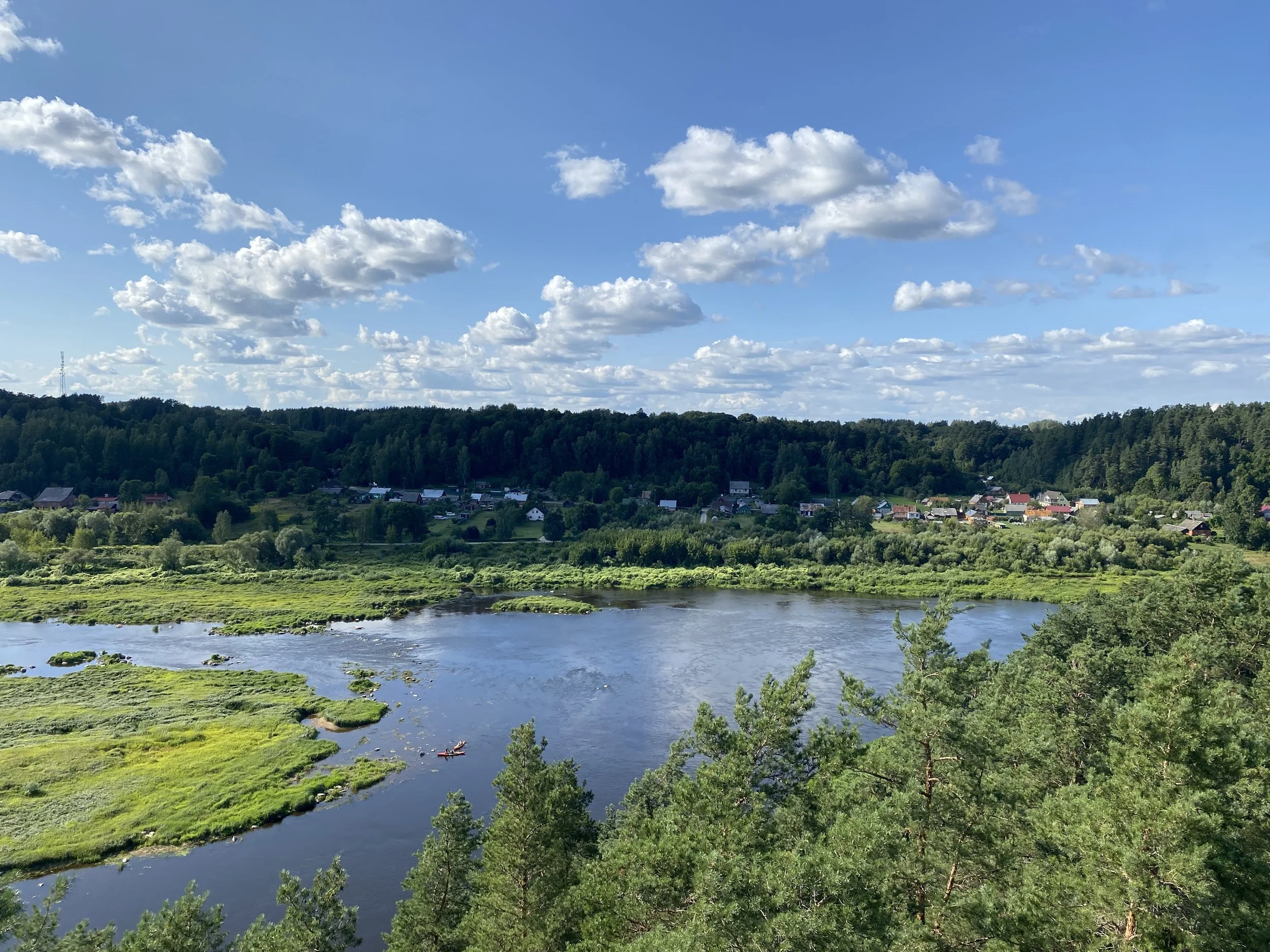
I quickly began to see the region as a kind of borderland, just like southern Arizona. At a local festival where booths sold handmade crafts, vintage costume jewelry, and artisan ice cream, there were recruitment tents for both the military and border patrol. Multiple locals told me that the border patrol is a common employer, something I’d never heard of while living in Riga. I was told that before the invasion of Ukraine it was common for Latgale residents to cross the borders to Russia and Belarus for work or even just a cheaper tank of gas.
Like southern Arizona, Latgale’s borders have been redrawn multiple times, and also like southern Arizona this has resulted in a multiculturalism unlike anywhere else. Latgale is home to ethnic Latgalians, close to a hundred thousand of whom still speak Latgalian, a distinct but mutually intelligible language with Latvian, as well as a large population of ethnic Russians. Because Latgale was under Polish-Lithuanian control while the rest of Latvia was ceded to Sweden, over half of Latgalians are Catholic, while the rest of Latvia is overwhelmingly Lutheran.
The summer school offered a dreamy, bucolic window into rural Latvian life. We met in a classroom attached to a teaching kitchen where we learned basic Latvian words and phrases and practiced making midsummer cheese, the ingredients carefully labeled with post-it notes of their Latvian names. Most days we also took excursions to the surrounding countryside, touring green pastures, freshwater lakes, and small family farms where we kneaded dark rye bread on dried oak leaves and sampled caviar and raspberry wine. We met with cheesemongers and flower farmers and beekeepers, and this, too, was a form of industrial tourism.
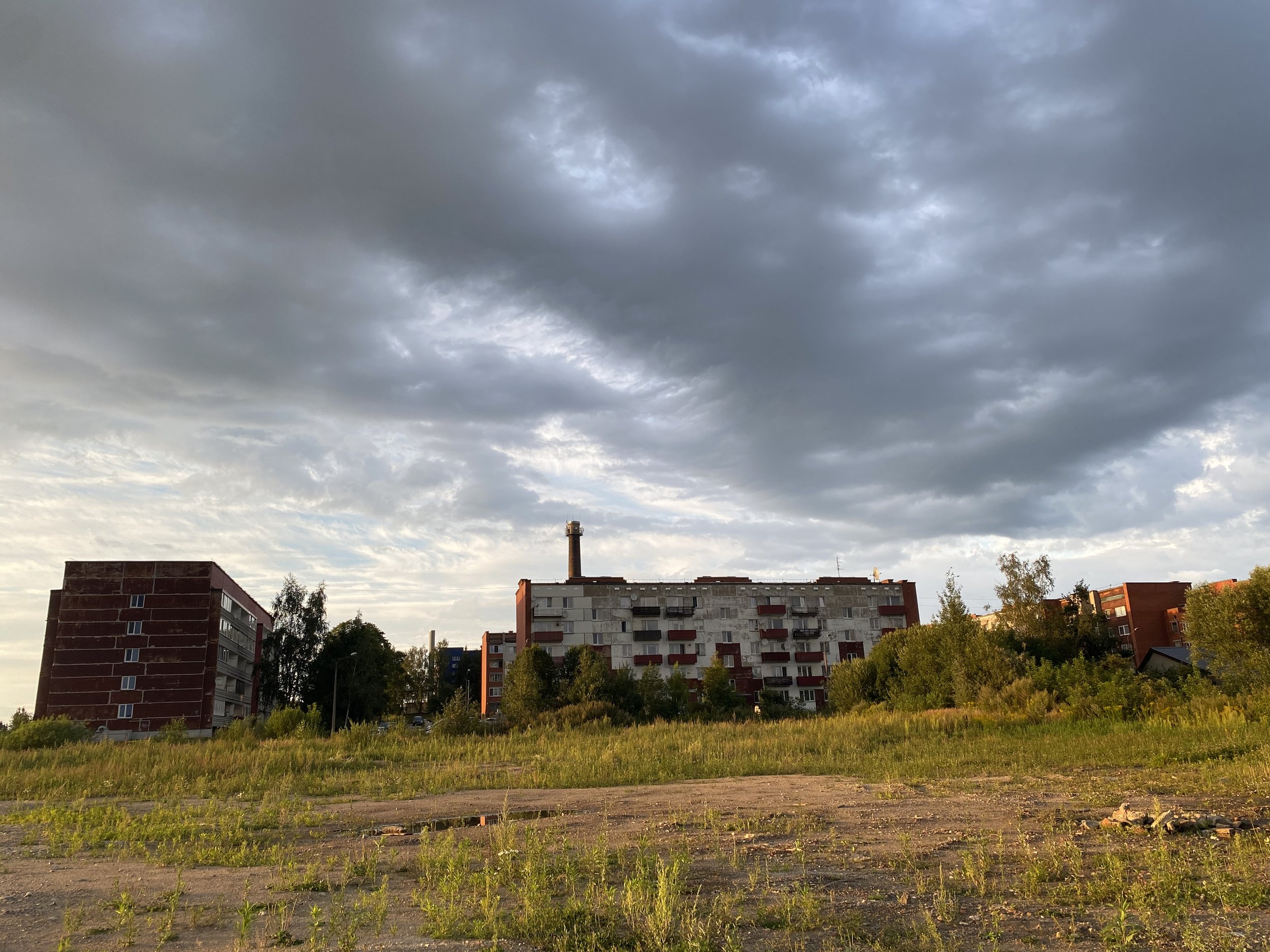
But similar to Bisbee, there’s more to Latgale than what its tourism suggests. Two thirds of Rezekne’s buildings and housing were flattened in World War II, and many of its main roads are lined with brick and concrete Soviet apartment blocks. I’d spend the long Baltic evenings walking between them, past modern strip malls, meticulously gardened lawns, overgrown meadows, rusty junkyards, and old-fashioned wooden houses, all bathed in yellow light. The streets could be eerily quiet, though sometimes I’d encounter the occasional older woman pushing a granny cart, or a cat sleeping in a window box, or a slick black car with darkened windows rounding a corner with reckless abandon. I’d go to the locally owned kebab shop and try to read the menu, written in both Latvian and Latgalian, and then I’d cross underneath the overpass and see CCCP graffitied with a hammer and sickle. Latgale isn’t just its pastoral ideal; like the rest of Latvia, remnants of occupation constantly bristled up against each other.
But the most interesting industrial tourism site I visited was not a public attraction, nor was it open for tours. I first learned of it through a display in the lobby of the summer school. Each morning, I’d pass glass cases filled with old food packaging and a small exhibit on the now-shuttered condensed milk factory that used to exist down the street. The signs explained that the factory was founded by the Soviets in 1957 and was once the largest producer of canned dairy products in the Baltics. The packaging on display primarily came from Soviet times, from the local factory but also from all over the USSR. Most of the cans were blue and white, a variation of the iconic design seen all over condensed milk cans in Eastern Europe. I attended the program for several days, walking past the exhibit each morning, before I realized that the exhibit was not an institutional archive but the personal collection of Arturs, the manager of the building.
Arturs initially seemed quiet and soft-spoken, the youngest person and only man on our team of teachers. But he was easy to talk to, and he patiently answered my many questions about Latvian folklore and literature as well as local Rezekne history and culture. I learned that his interest in food packaging went beyond its aesthetics; he holds a master’s degree in laser technology and has studied its role in food processing, including nonthermal milk processing and laser sterilization. He’s also researched and developed an acorn coffee product as a caffeine-free alternative, and he plans to return to school for his doctorate.
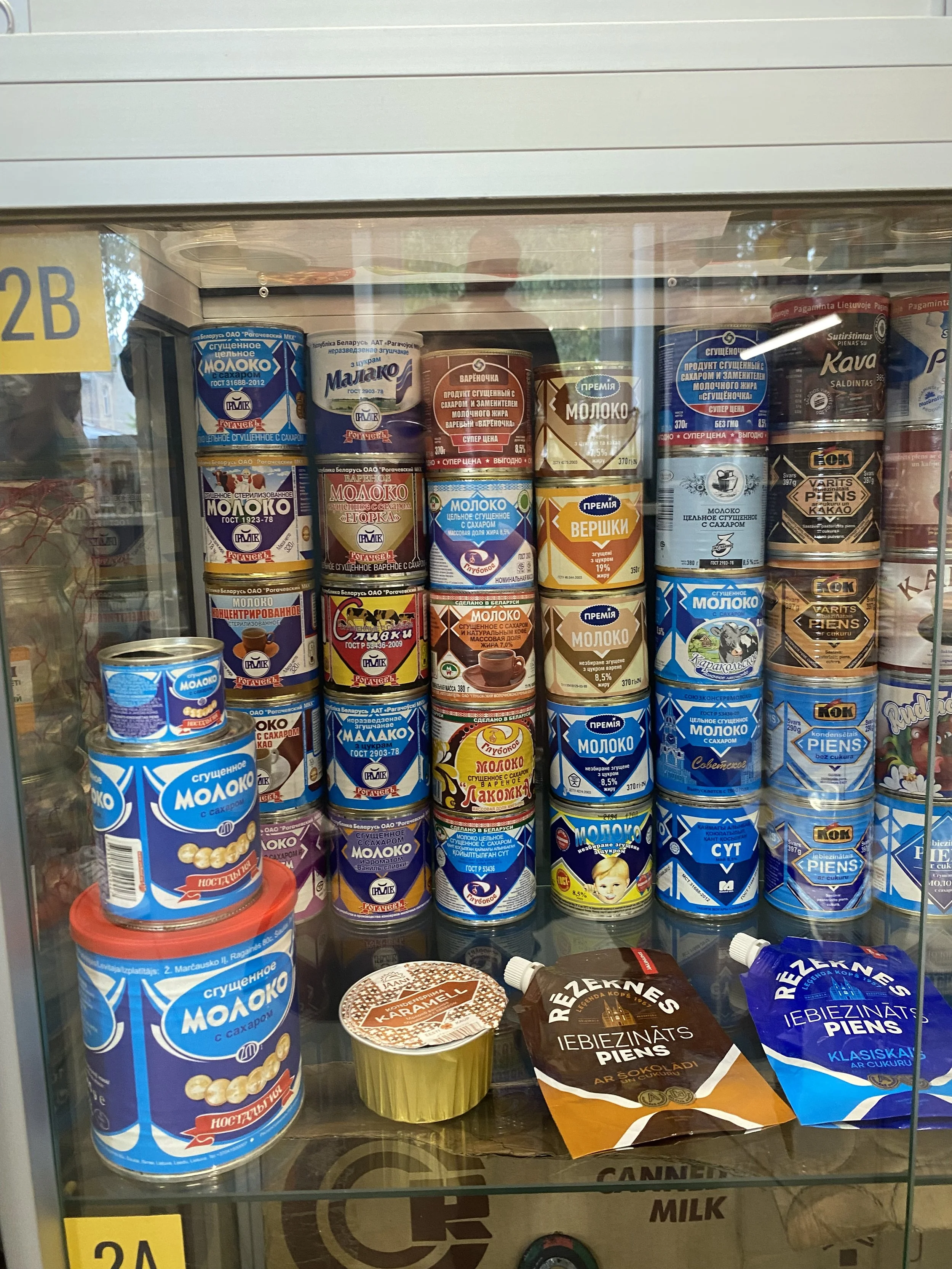
He lit up when he gave us a tour of his exhibit. He explained the history of the factory, and that most of his collection was packaging he’d either found exploring abandoned buildings or been gifted by locals who knew of his museum. I’d never met a historian like him before, someone without institutional backing who simply records and collects and archives out of sheer interest. In addition to the museum he runs a website dedicated to cataloging photos and information about the factory. When I reached out to the other teachers from the program with questions about the factory they directed me straight back to him. Any related Google searches brought me back to media he had created.
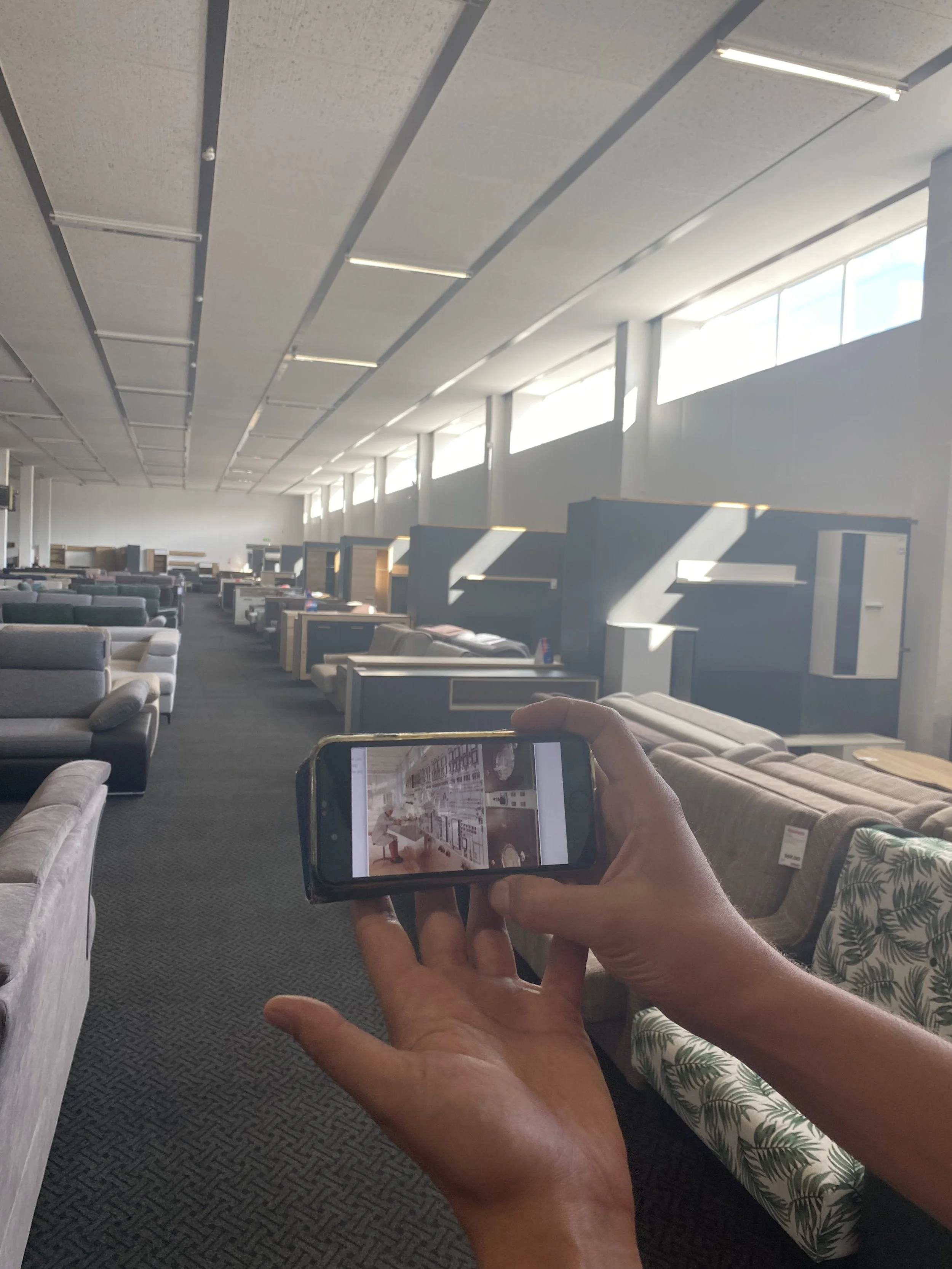
On the final afternoon of the program, Arturs offered to take my friend and me to see the factory ourselves. We climbed into the back of his car, and he drove us through the city down one of its main roads. The factory was on the edge of town, next to a contemporary office building and across the street from a gas station and a grassy expanse. It consisted of a large brick building and several smaller ones, and a long, skinny smokestack. Arturs pointed out a second-floor walkway and explained that workers used it to roll milk cans from one building to the other. Part of the main building was now a furniture store, and as we passed through rows of sofas and divans and particle board coffee tables, he showed us a photo of what the interior used to look like, lining up his phone with the exact place where the photo was taken.
Back outside, Arturs pointed out where the factory’s employee housing and culinary school had been and took us to one of the abandoned buildings, to a section that had burned down. He told us to wait on the sidewalk while he rummaged around inside the ruins and reemerged with one of the same milk packages from his museum. I couldn’t help but laugh, delighted to witness his enthusiasm and his never-ending quest for additions to his collection.
Arturs’s work feels like a counterpoint to the Queen Mine. He has no investors or institutions—Latvians are quick to disparage anything Soviet-made, and for understandable reasons. This means that he lacks funding or space for his project, but he also works without a lot of oversight. He can collect the things he wants, take the photos he wants, give the tours he wants. And he preserves everyday objects, things that don’t necessarily constitute a historic event, but he preserves them because they mattered, because they’re evidence that people were here.
It’s not a perfect comparison, of course. The milk factory and the Queen Mine’s heydays were in different decades, different landscapes, and while Arturs has relative control over his museum, our mine tour guide was an employee of a much larger corporation. Though Rezekne’s population is five times the size of Bisbee’s five thousand, the tourism industry in all of Latgale pales in comparison. The Rezekne summer school exists for the express purpose of bringing in foreigners who might otherwise never see Latvia at all. Almost all of my classmates were there because they had seen a free program and wanted to get out of town, not because they specifically sought out Latvia. In contrast, the streets of Bisbee are flooded with partygoers and tourists.
And so it makes sense that the Queen Mine is a for-profit business and that the condensed milk factory has gone to ruin. But I also think there’s something here about speaking truth to power. The general consensus—and especially the one pushed by the Latvian government—is that the Soviet Union was bad, something to recover from. Latvians no longer live under Soviet rule; there’s no longer a prize for pretending things weren’t so bad. Free from occupation, Arturs isn’t obliged to cater to any one narrative—the factory isn’t all good or bad. This isn’t to say that the current Republic of Latvia is without its own forms of oppression or that its borders and industries don’t impose a violence of their own. But there is a freedom in the factory’s relative obscurity, in the lack of potential profit.
And it makes me wonder what the Queen Mine might look like under different leadership, under a different empire or no empire at all. When there’s no more money to be gained, what kinds of truths will emerge? What kind of histories will reveal themselves when there’s nothing at stake, when there’s no authority to defy or obey, if such a future is possible? What kinds of stories become illuminated in the full light?