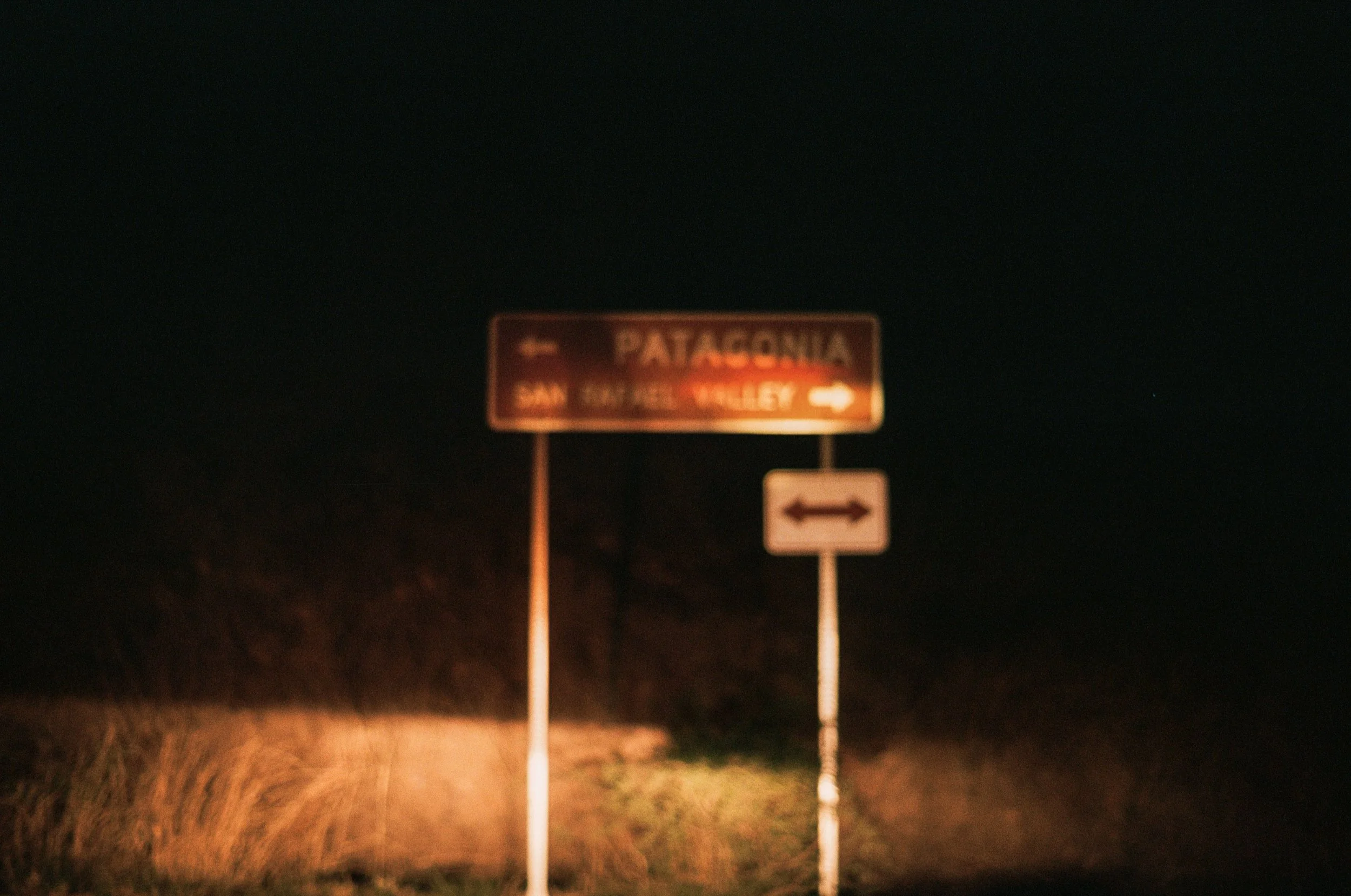
Groundless : An Excerpt
With Images from the Borderlands
by Eric Atie
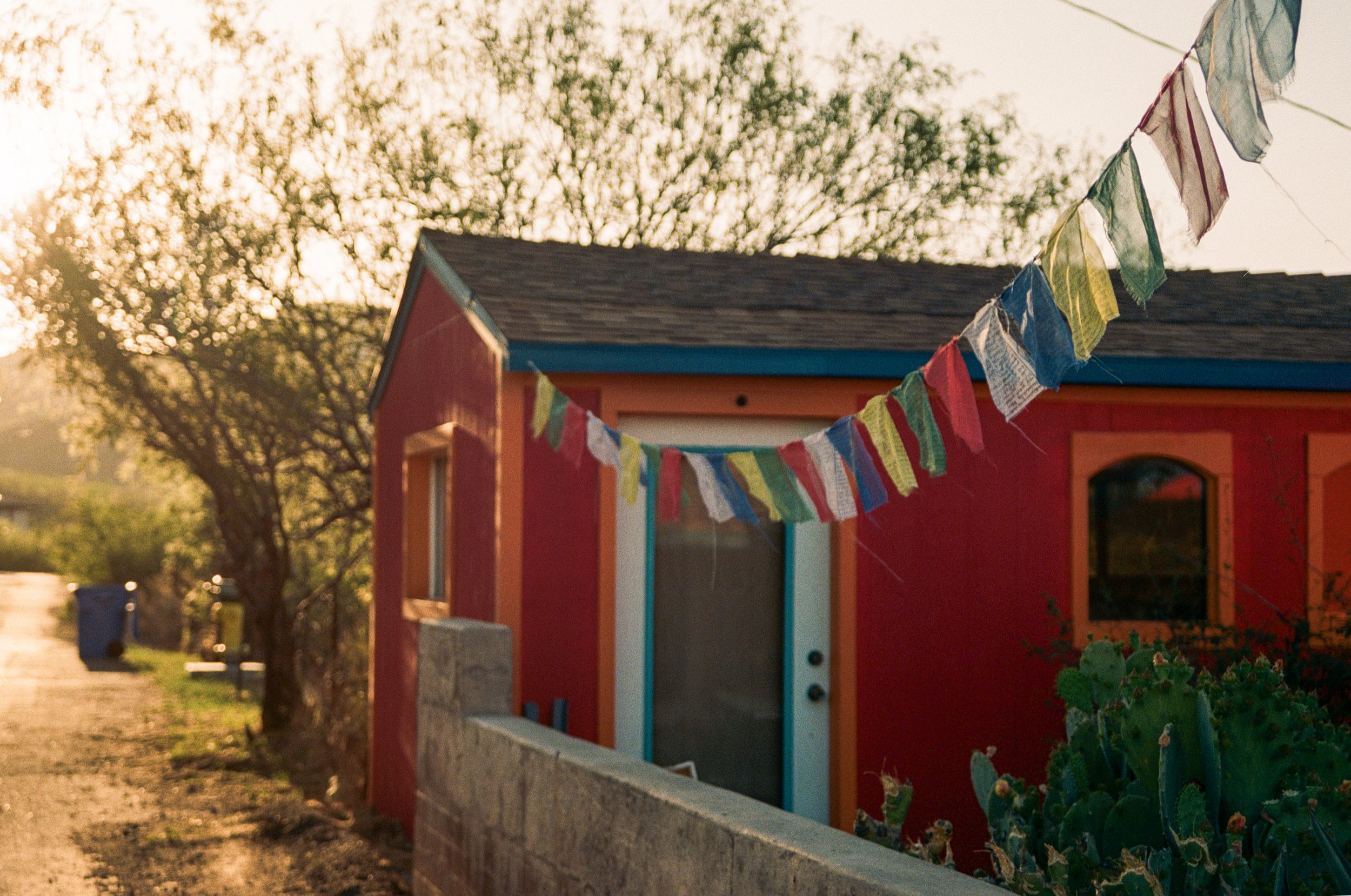
In one of my earliest memories I am awakened from what feels like a dream, separated from the sleeping bodies of my siblings in the backseat of my father’s car. The road is wide and empty, the street lights are lined, surrounded by violets of black, distanced apart into an unseen horizon. They forge down canopies of warm lights that do not merge. The car is moving, but not in a way a car moves on an open road: foot to the pedal, wind to the shield. It moves slowly, engine coughing, resisting its destination. Slow. Resist. Halt. There is no one in the driver’s seat, only my father's hand firmly gripping the steering wheel, the rest of my father's body cut out through the open car door. He moves, one with the car, Push. Resist. Halt.
I feel more conscious now, and for the first time I notice my mother's absence in the back seat. I turn around just before the panic sets in, just as the car engine cranks, yet another stop. I watch through the rear windshield as a small shadow grows larger and larger. I watch until the light catches her frame. She meets up with the car’s trunk, close enough that if I climb up the backseat of my father’s car and stretch out my hands, close enough that if she stretches hers too, and by some miracle the rear windshield suddenly didn’t exist, our hands would touch. She places her hands firmly on the bumper of the car, and together they push - resist, slow… the car engine kicks into life, and my father jumps back into his car seat. The car picks up pace, fast enough to watch my mother become smaller and smaller again, her shadow fading into the night. Slow. Resist. Halt.
***
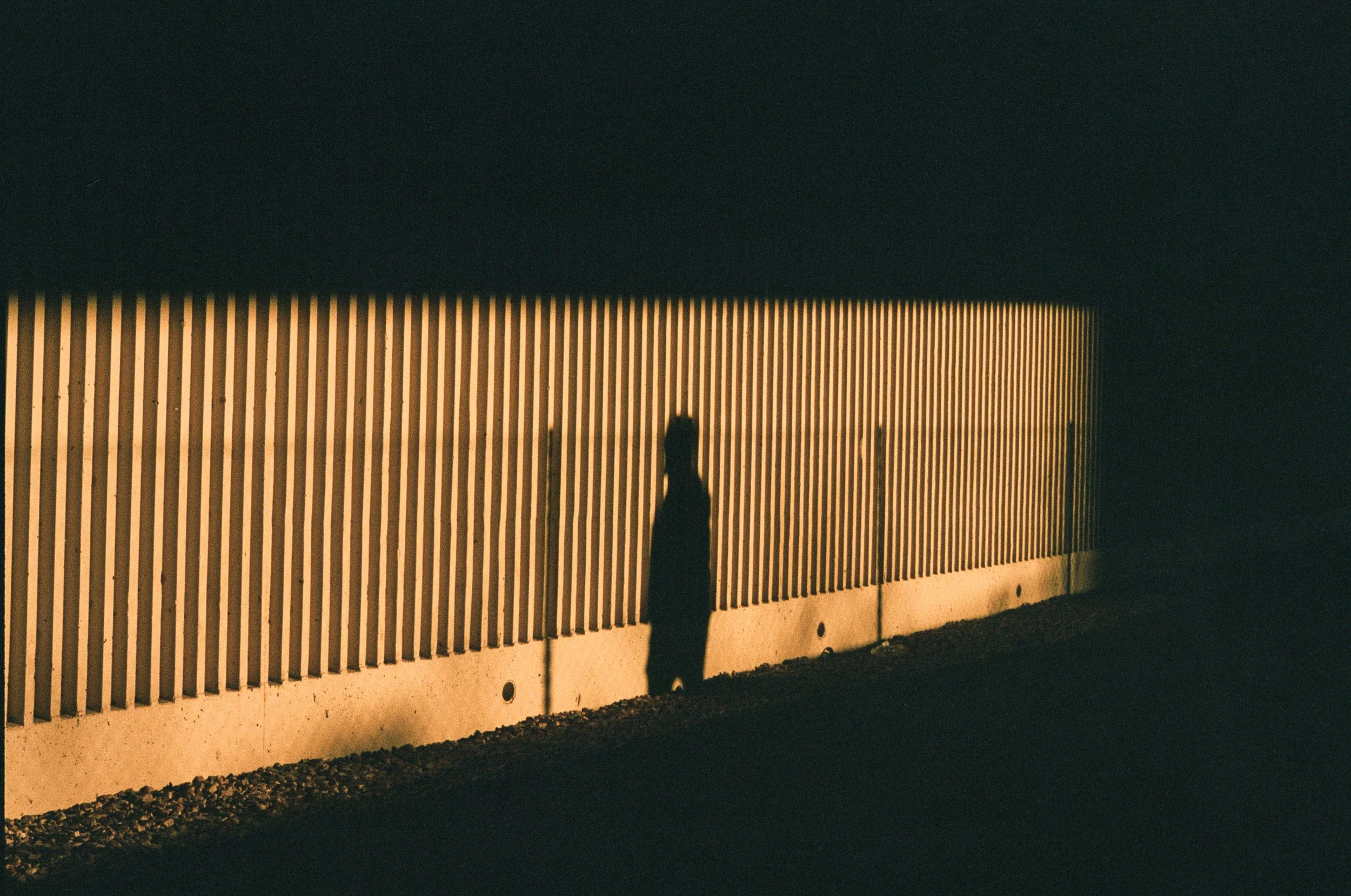
The temperature is in the 90s when we finally arrive at Warren, all four of us, MFA students at the University of Arizona, on a research trip across the southwest borderlands. We spent more than a few minutes trying to figure out the entrance to our Airbnb. We attempt the locks on the south and west gates, up the hill, oblivious to the driveway that leads directly to our door. Nellie and I are out of the cars, phones in hand. Bea and Rose are driving up and down the hill. Even now, at this moment, I realize I have always been accustomed to movement. How the history of my immediate family’s formation and settlement traces a path from South-South to Northern Nigeria. These movements, occurring throughout the 1990s, were, in part, triggered by my father’s exploration and, in part, by the ethnic crisis and the religious conflict on either end. And as I have, over the years, come to make my own transitions into new cities and spaces, I have found myself wanting to understand placeness. I find myself getting lost in the search for the familiar. It is 2025, and I am in a new continent, a new country, a new state. I am an international student navigating loss, my identity adrift in its newly-morphed state, and an unsettling political climate. These questions have become bigger, more immediate in ways that are both relational and magnanimously beyond me.
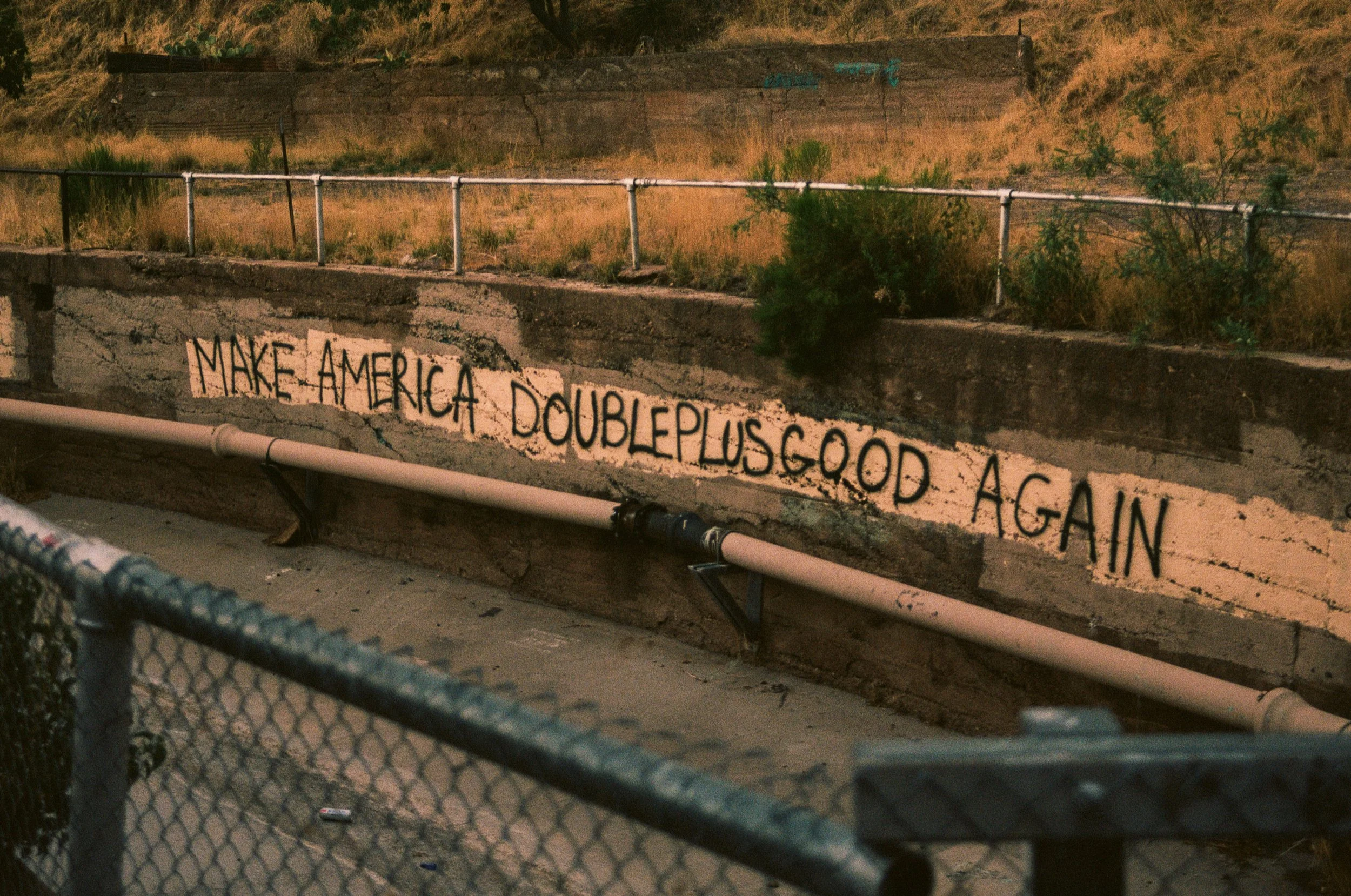
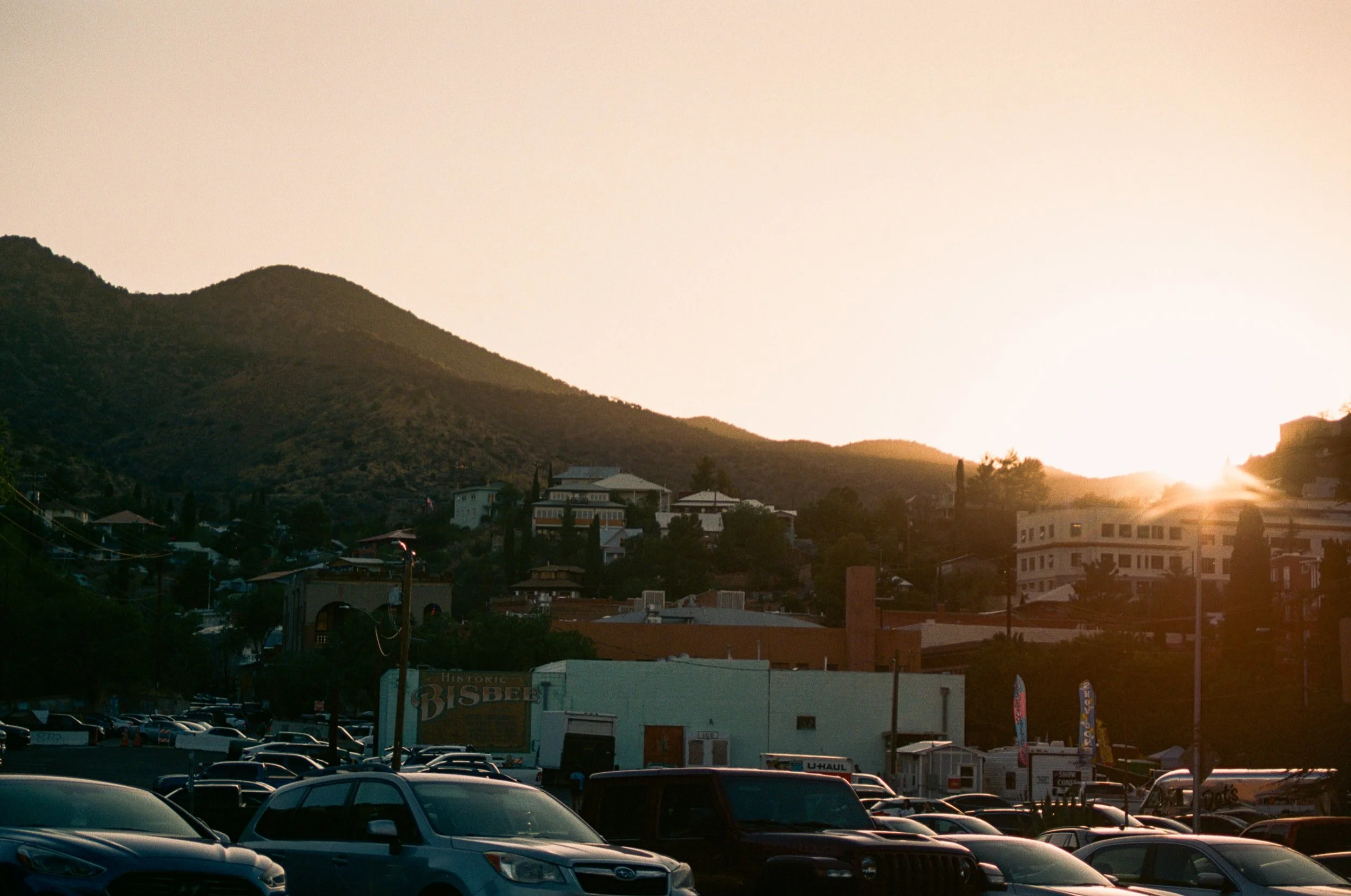
The white Tacoma truck pulls up into the driveway just as we find our door. Ethan, Bea’s contact is punctual. A Researcher and Ecologist who had left California years ago for a restorative path here in the borderlands. He gets down from the truck and approaches us, barefoot. In a few minutes we will be settled in the dining area of what will be our home for the next few days while we make our visits across the area of Douglas and Bisbee. We are in the furnished kitchen with multiple sitting areas, a space big enough to fully encompass the two-bedroom apartment I share with my PhD-seeking Indian-American housemate back in Tucson. The house is spacious with furniture that is slightly outdated in a way that makes it homely—like those family houses one sees in less crowded cities back home in Nigeria, the type that takes one grandparent a lifetime’s worth of work to build and open seasonally to welcome every branch of the family tree—a fitting character for its structure, for this town. Through the kitchen window, I start to notice the simple beauties of this town, its houses threaded along the hills like clustered beads on a fattened bride's neck, the mirage of green and dirt backdropped in accentuated curves underneath the burning Arizona heat. I think of the sun moving noticeably with the clouds, falling, soon, behind the mountains. I think I should call my mother.
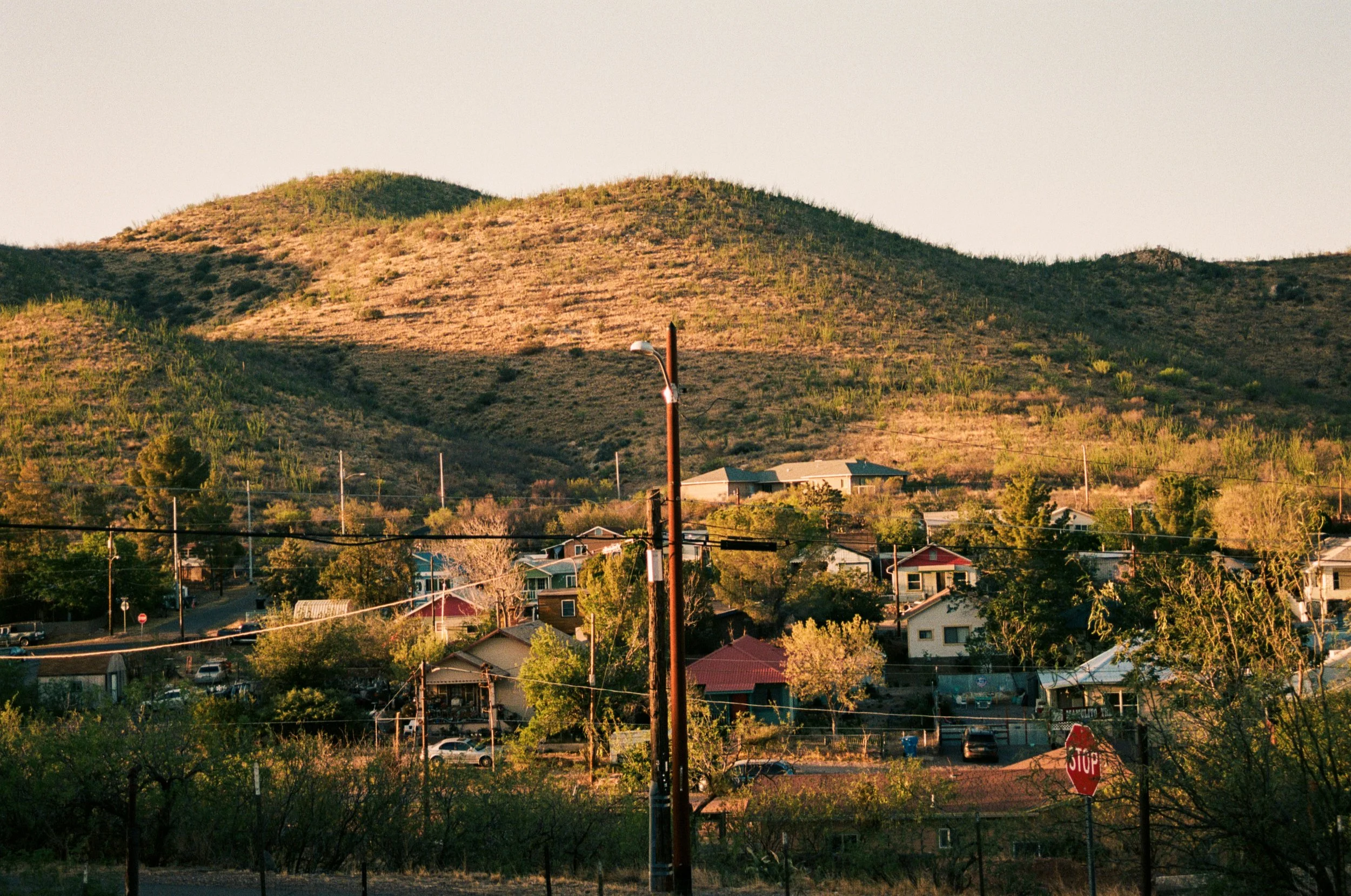
We take turns talking about our purpose on this trip, each of us with a specific focus in our research on the borderlands. I’m looking to document, I tell Ethan, putting my photography to the fore. I want to explore memory and belonging, to stamp a connection on what is remembered, how it is/could be remembered. I want to explore change as tangible movement, within this social or political tension, across desert dirt. I do not go into the nuances of this answer with Ethan, or how it's connected to my own internal landscape. This turbulence of grief, of losing both parents, has kept me continuously moving on my feet; having to pack up a bag and keep moving, miles and miles away until breathless under the dry Arizona heat.
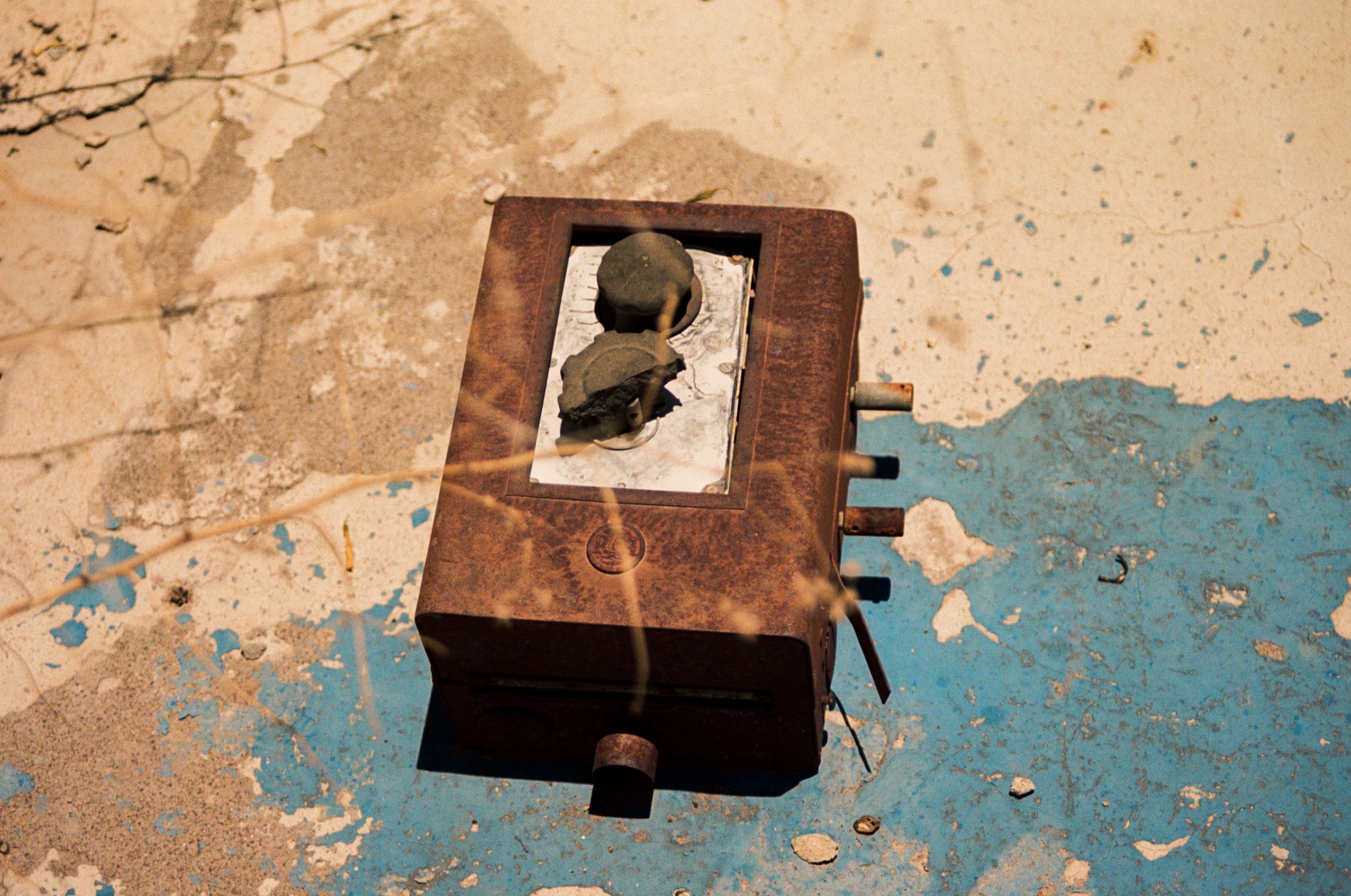
Ethan speaks with his eyes, passionate. He talks with frustration, too; his words are laden with a tone that matches his energetic personality. His demeanor is prophet-like, and the conversation turns to more present environmental issues. He talks about this space and its continuous deterioration: the droughts and overgrazing, the border and its effect on migration and wildlife. His frustration is clear; there is an urgency, and people are not paying attention to what truly matters!
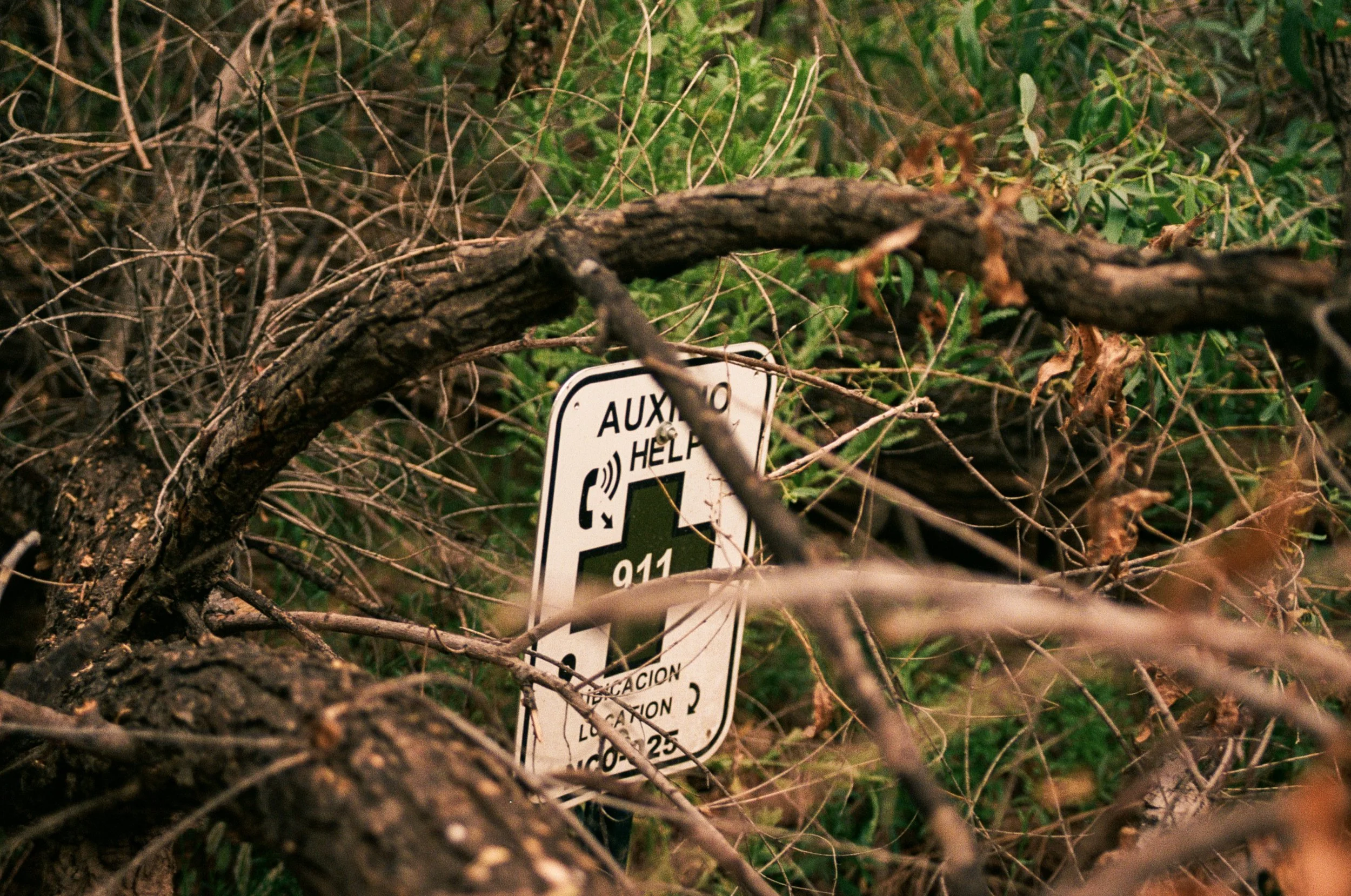
Ethan pulls out his phone and opens up an image that fills the spaces his words wouldn’t reach. We take turns passing it around the table. On the screen, three images of a similar spot showing the Sonoran Desert are collaged into one, made courtesy of the Santa Rita Experimental Range. Underneath the screen, 1902, 1951, and 2003 are written in bold, signifying each picture was taken about 50 years apart. The difference is stark, this progression from lush grassland to dry dirt as the years go by. The answer is almost as dreadfully quiet as the question on his face.
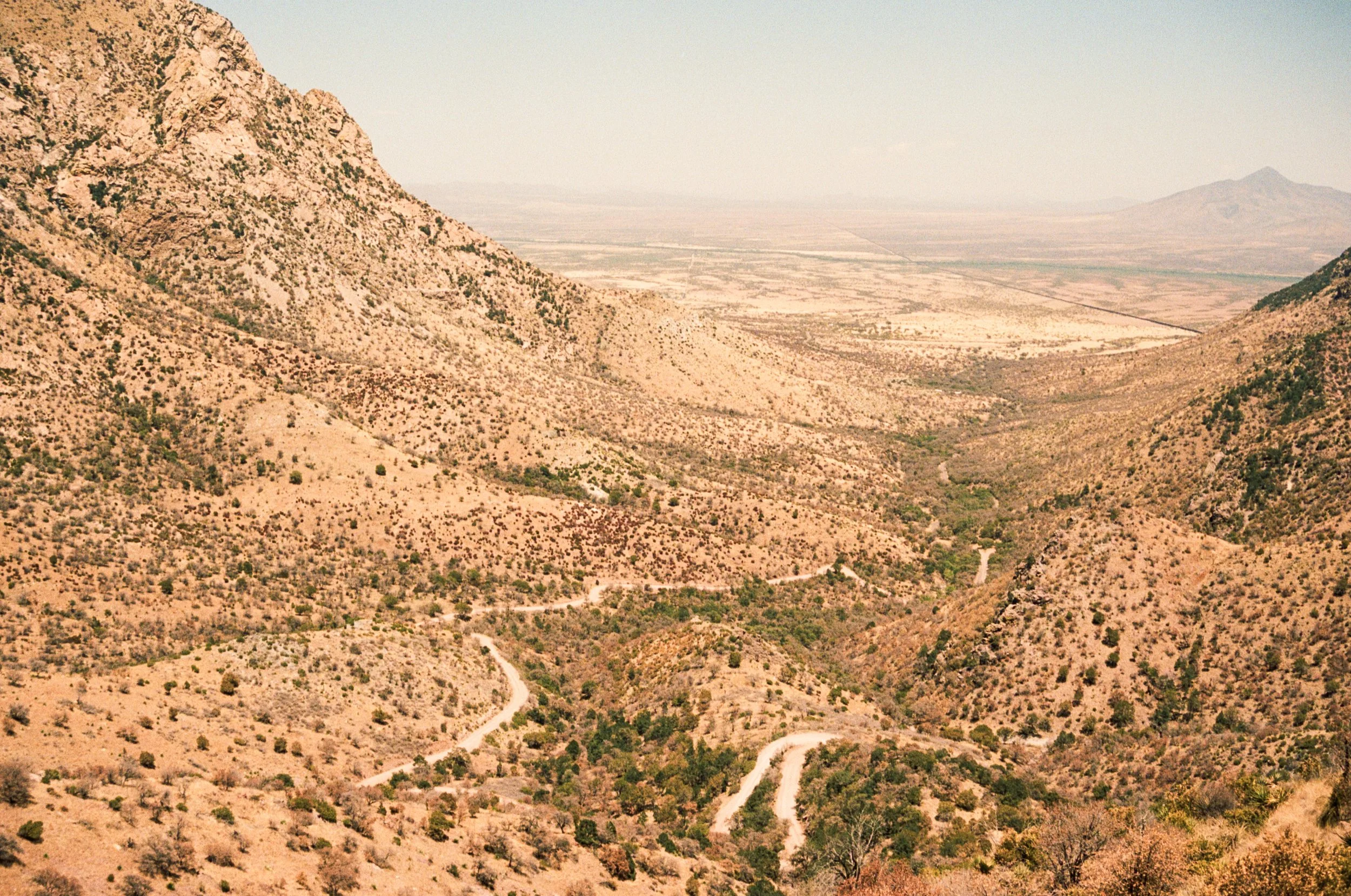
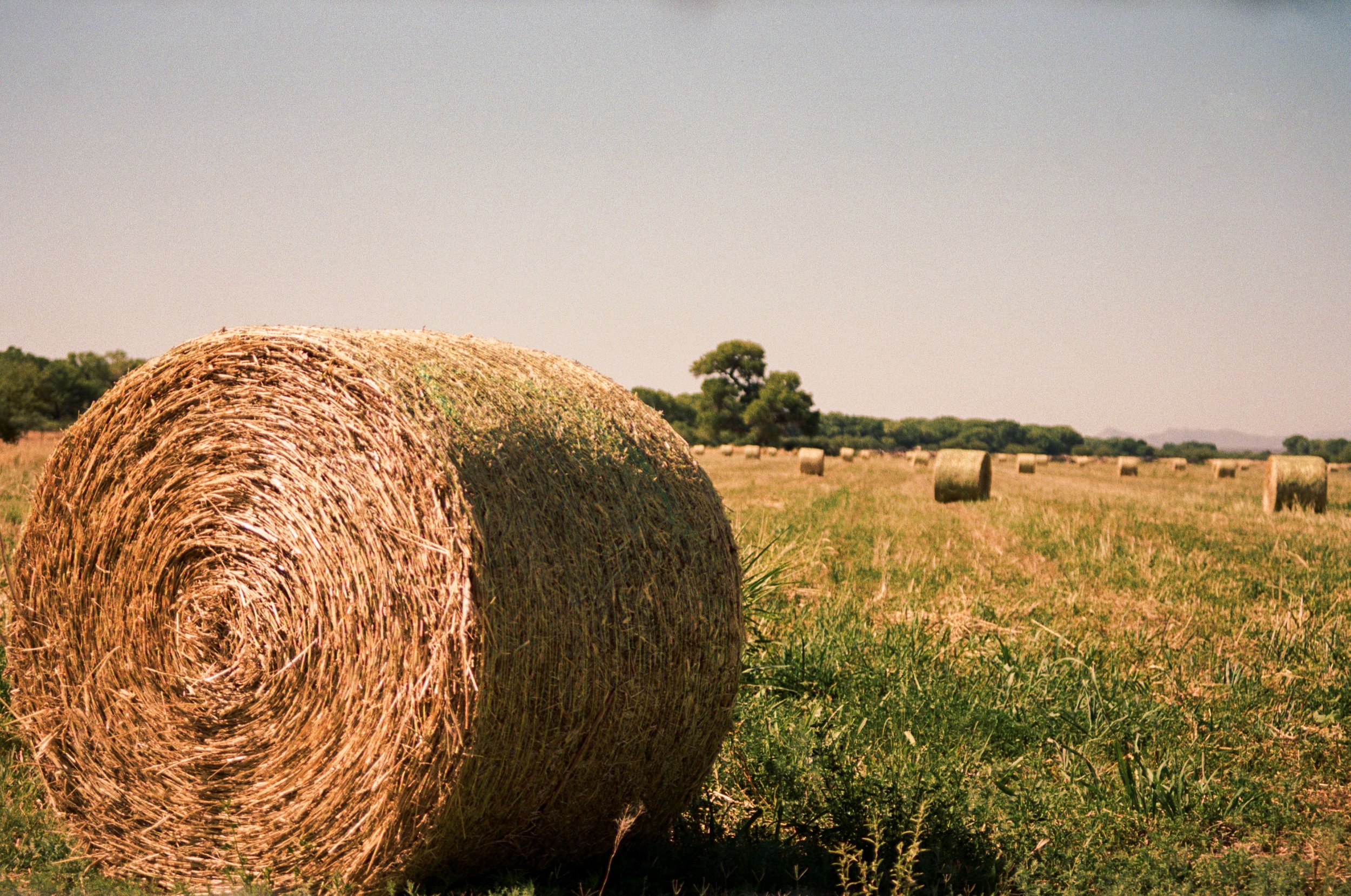
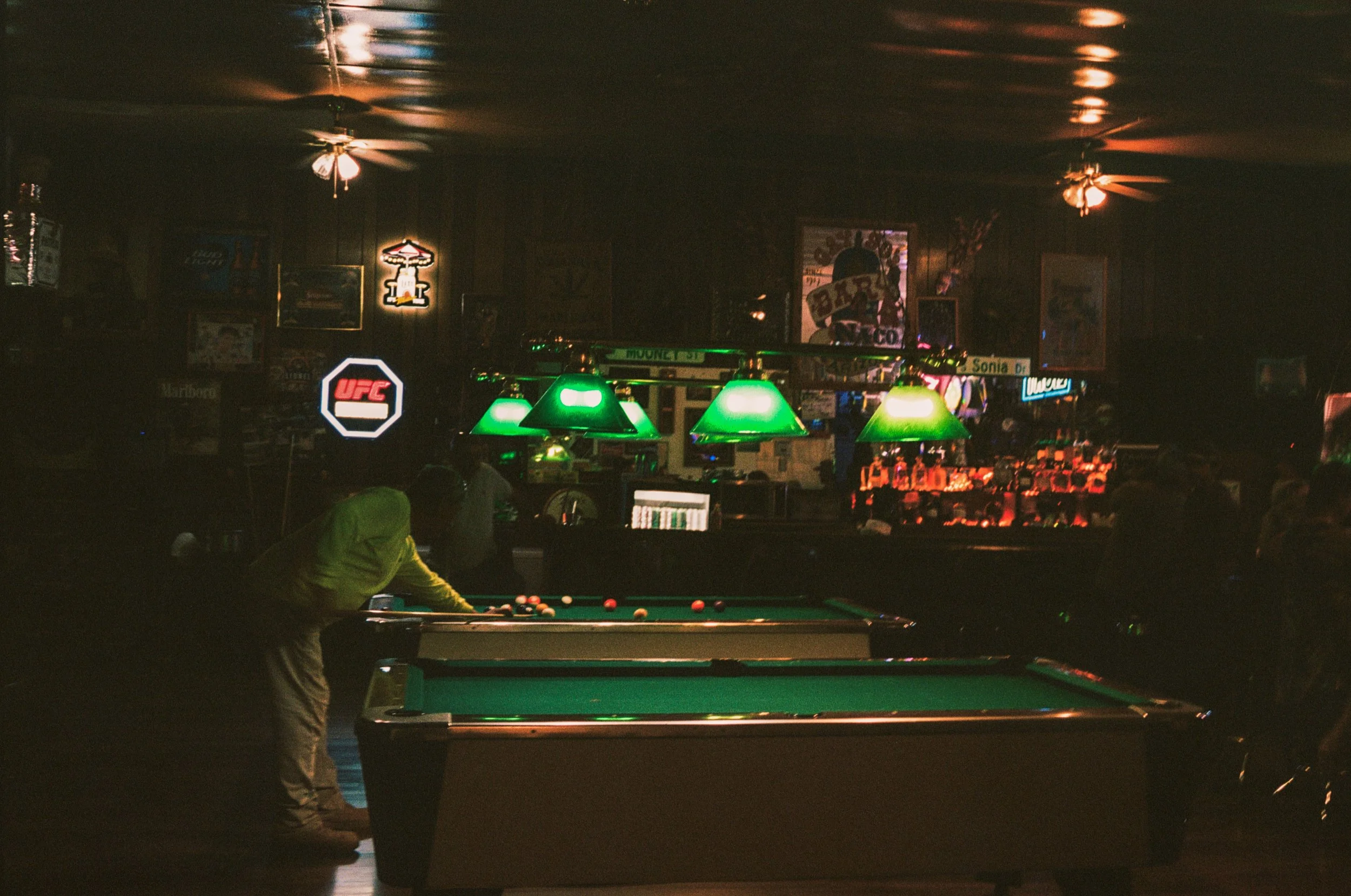
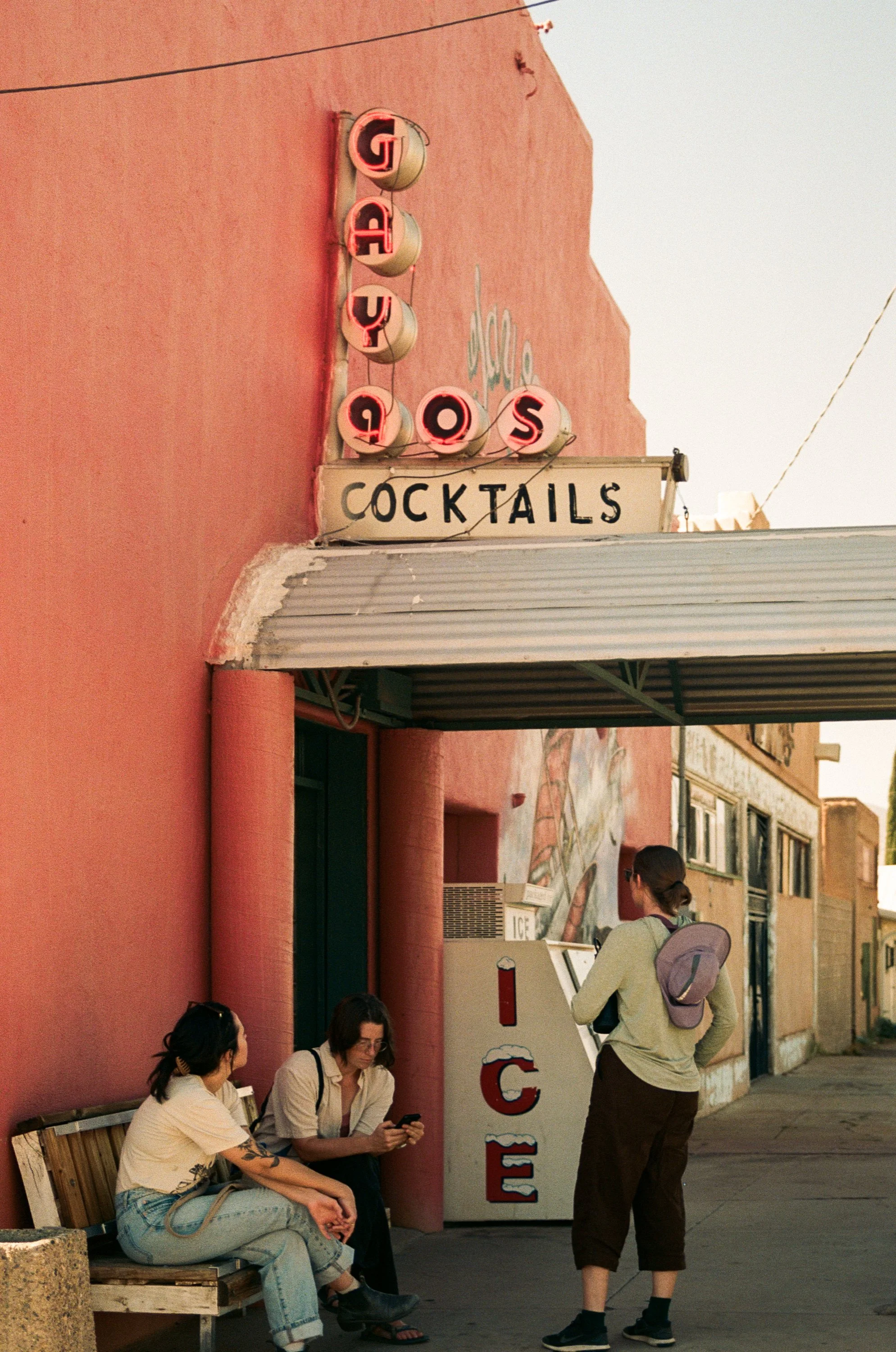
We had spent the first part of our day hiking the San Rafael Valley, the four of us moving dots across a vast expanse of grasslands. We had followed the path, read the signs at the highest points of the valley, and at the peak traced the length of the iron border, running for miles through squinted eyelids. It was my first time seeing the border. By the time we reached our next stop, Naco, we were exhausted from the heat and counting on a good meal. We found our way to the Gay 90s bar, just a few feet away from the border, a high wall of burnt orange. We walked through the wall of faces and articles locked in picture frames that ushered us into a dimly lit open bar - a scene from a small-town Hollywood movie. Our excitement was cut short when the hostess, acknowledging our need for a proper meal, suggested we cross the border into Mexico instead, as only frozen pizza was on their menu. We drove away, away from the border, through the sleepy maze of Naco, into the open road with large ranches guarding its sides.
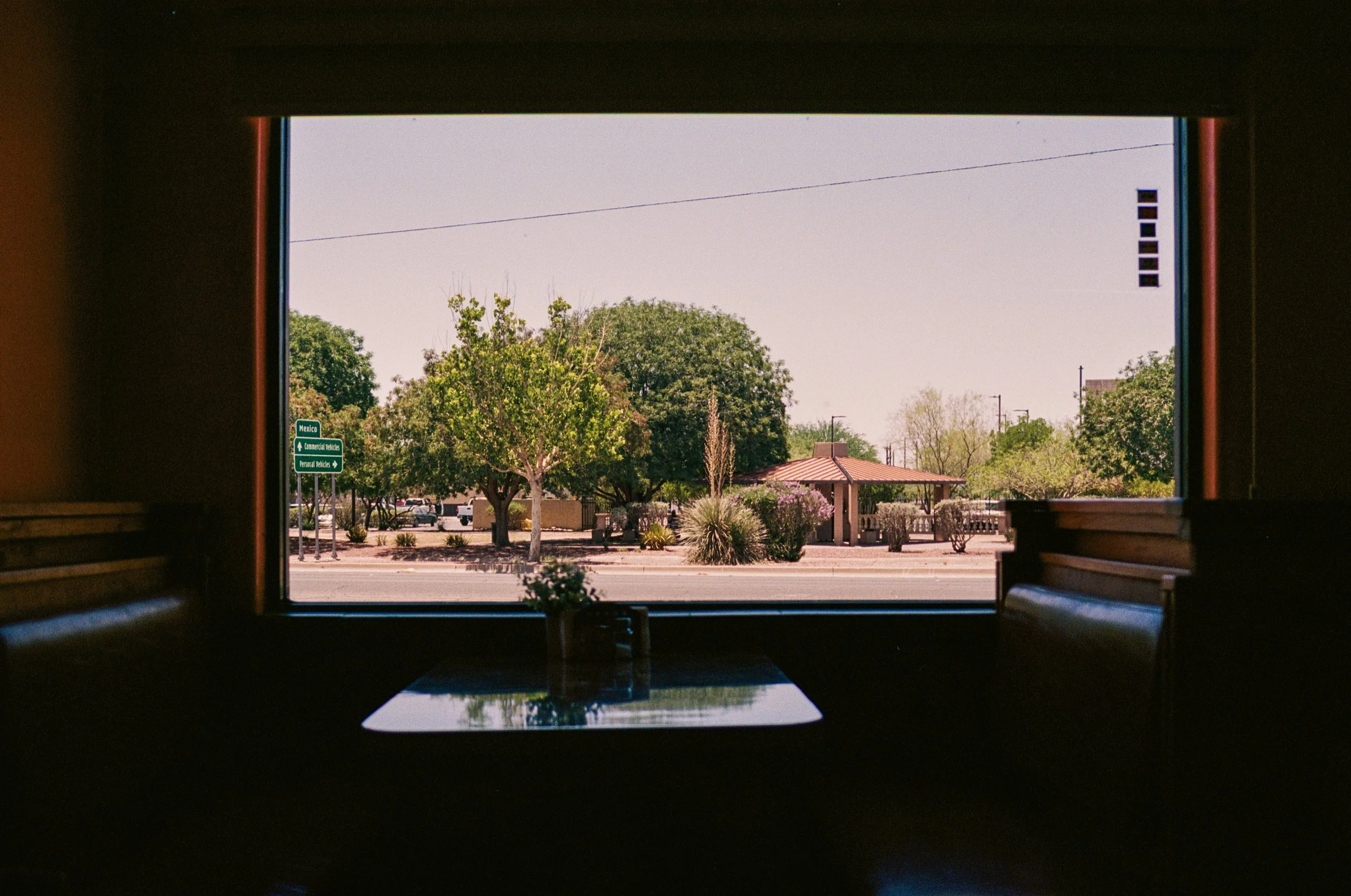
“We didn’t want to cross the border… Eric is an international student.” Rose’s voice pulls me back into the present. My mind drifted off, yet again, through the portal that is the window, out into my father’s compound, where a giant palm tree stands, marking their resting place. I shake off the quiet anxiety I feel, one I was slowly starting to gather as conversations around immigration policies and visa restrictions became louder. I had spent mornings of the past weeks staying updated on what’s new, reading alerts, memos, and gathering tips to navigate the current climate. I make yet another mental note of all my documents, flattened in a ziplock and pressed into the corner pocket of my camera bag. I resist the urge to stretch my hands and check on them.
The sun is nearly behind the mountain as we see Ethan off. The wind is silent, warm, and it brushes against my skin, soft, like a heated blanket. Ethan invites us to come camping with him soon. When his truck pulls out of the compound, I think to pick up my camera and follow what is left of the sun. I think I'll pick up my phone and call my mother. I think I am tired.
***
The next day, as we arrive in Douglas, I take a picture of the Grand Theatre and send it to my friend, Pedro, who is back in Tucson.
“How's the little town?” He texts back. He has been following my trip.
“How are the temps? I love Bisbee… you’ll love it. I think their pride is this weekend… I would go but gonna be protesting.”
For Pedro, his memory of place is in movement; in his own ties to the borderlands. Born in Utah to parents from Sonora and Chihuahua. His parents, due to expired work permits, had moved back to Mexico shortly after he was born. Pedro recalls growing up between Agua Prieta and Douglas, with family spread across both sides of the border. He recalls the nuances of his connection to both places, crossing the border at least once a week with his undocumented parents. He recounts a connection between both sides: Douglas, capitalistically structured around commerce, and Agua Preta, vibrant in its social and cultural engagement. And as he grew older, he developed an intense awareness of the politicization of the border, its policing, its violence.
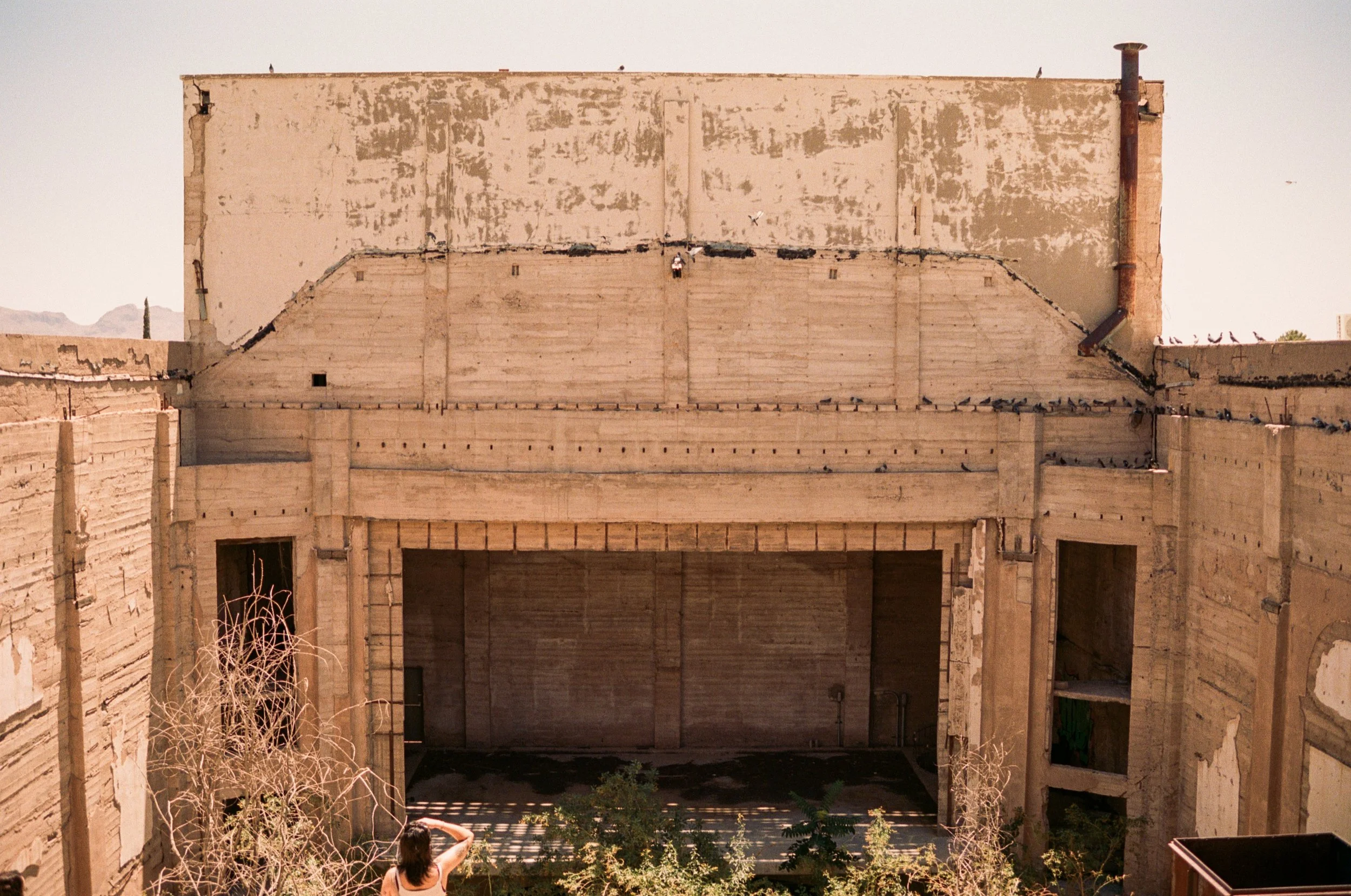
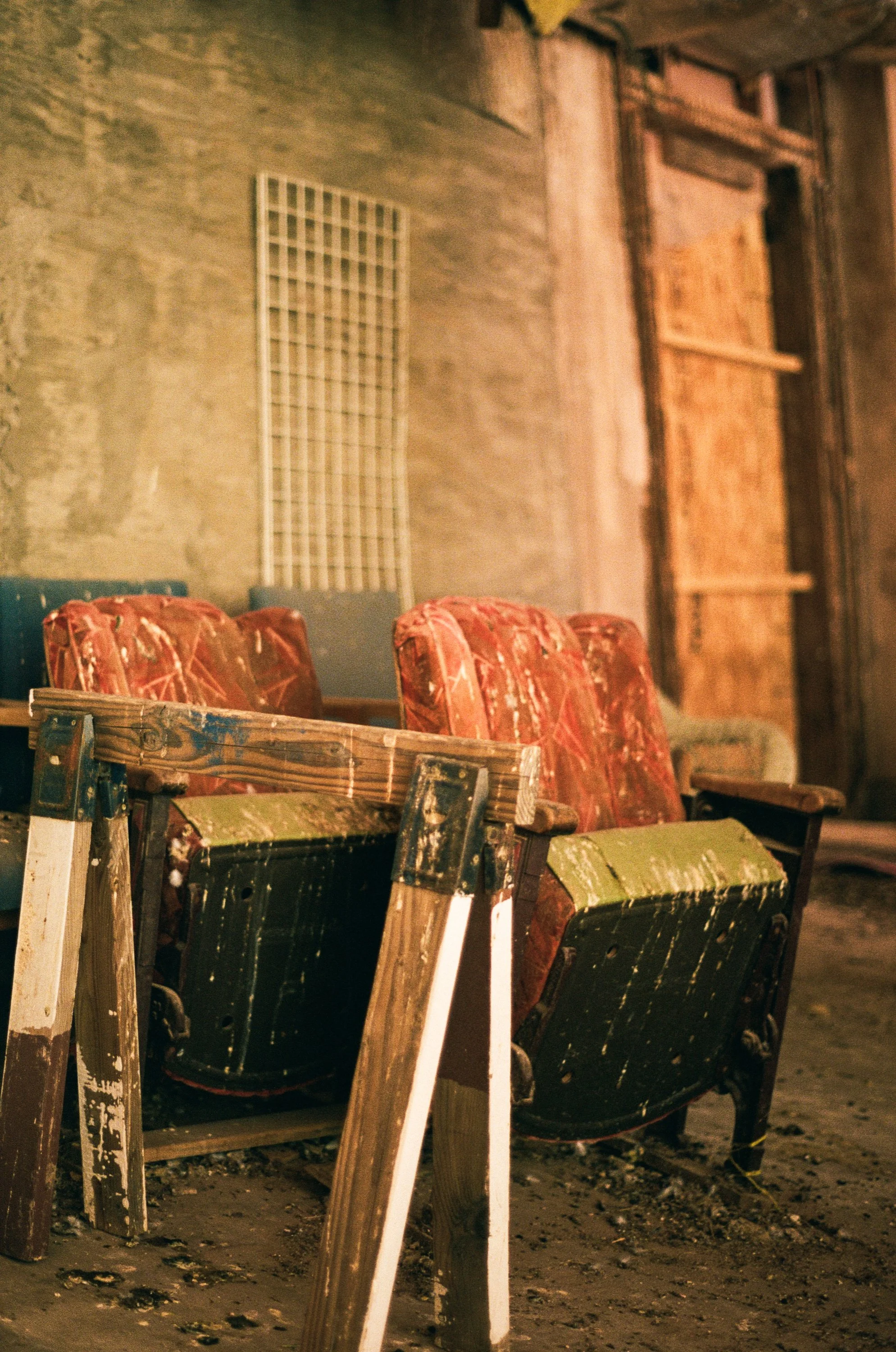
In 1919 the Grand Theatre, tagged one of the largest in the Southwestern United States, was opened. Built in the Douglas area of Arizona, this theatre was monumental in its making, one created to bring entertainment and, by extension, capital to the city. A January 1919 article published by the Douglas Daily Dispatch tags it the “Douglas Quarter Million Playhouse”, in anticipation of its opening scheduled for the same year. The article goes on to describe the building as one “designed for permanence and durability”, one that “will outlast the most durable building stone quarried from the ground.” And as the years went by, the theatre did serve this area significantly until its shutdown in 1958.
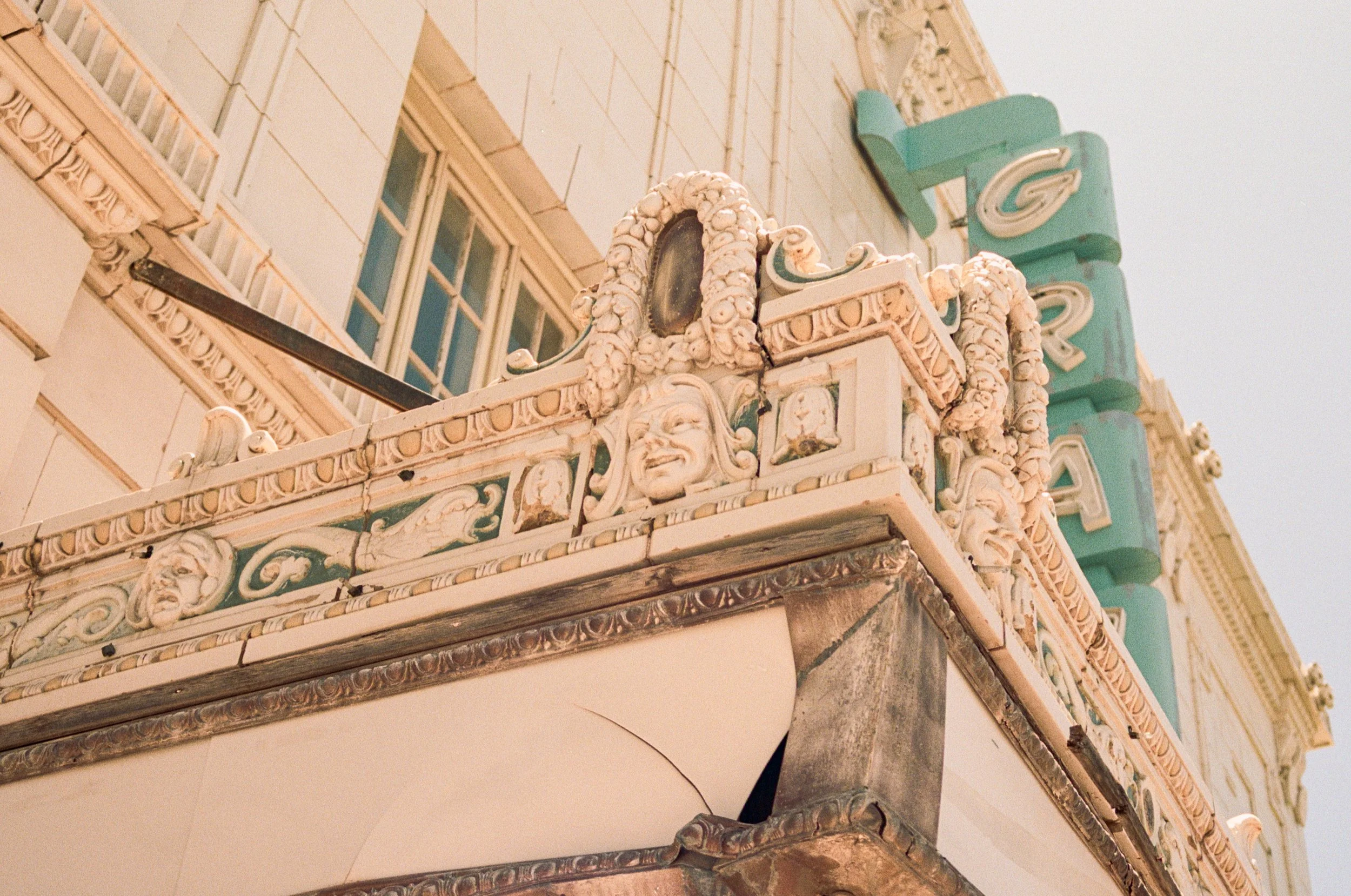
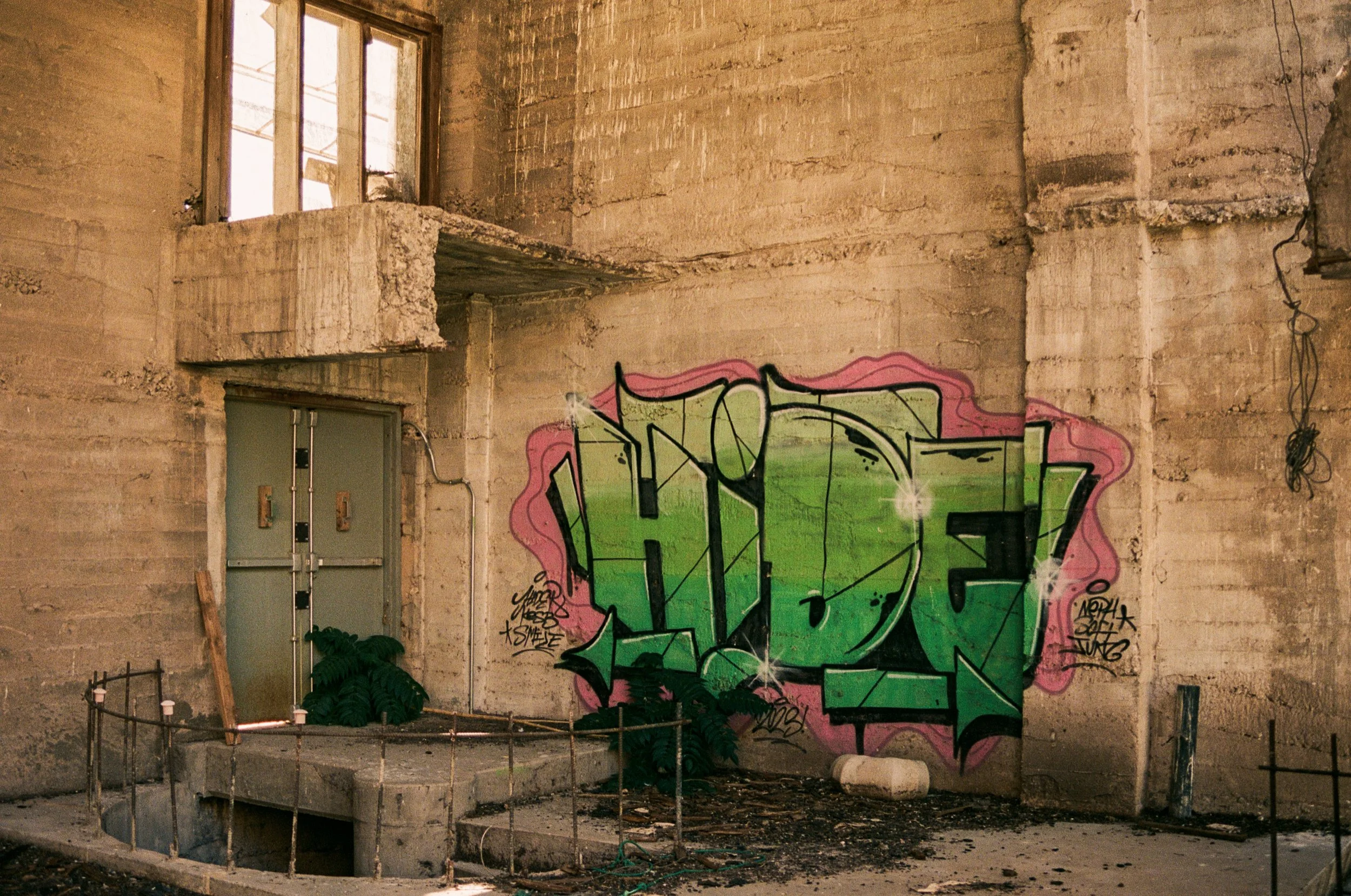
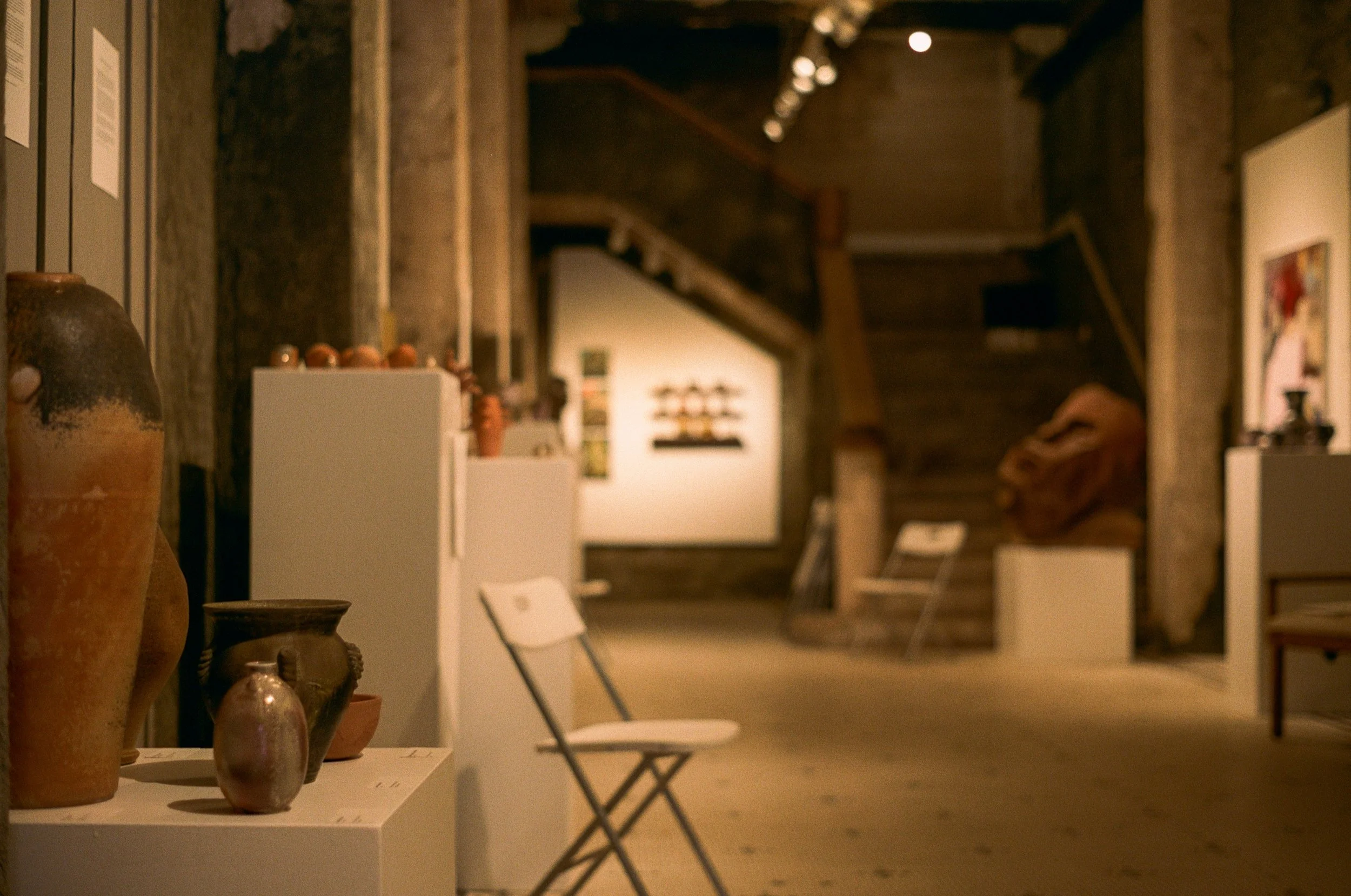
I catch up with the group and we make our way into the Grand Theatre, where we meet Martina, Co-Director of the Border Arts Corridor, an art organization serving the Douglas-Agua Prieta border community and leading the charge for its restoration. The exhibition room is warmly lit, with high, unpainted walls. Sculptures and paintings are displayed on walls and platforms, remodelled from what was the reception hall of this once grand theatre. I am intrigued by the interaction of time and place here, the multiplicity of conversations: the art, the artist, the intersection of community; the theatre, partly repurposed, functional in this decayed form, still holding space for it all.
We walk up the wide stairways, through the dark passage riddled with scaffolding, as Martina answers our questions about the theatre and its operations in the days gone by. The door opens to an open air of intense flutter. Birds in dozens coo from left to right, protesting our invasion.